
Most teams that ask how to do influencer marketing run it like an ad network: one rented post, then surprise when nothing compounds. Yet the channel grew from $1.7 billion in 2016 to roughly $32.5 billion in 2025, with brands seeing about $5.78 back per $1 spent, per Sprout Social.
This six-step playbook fixes the ad-slot mindset. It covers planning, finding, and vetting creators, outreach, management, and measurement, plus two sections most guides skip: FTC compliance and how creator content now feeds search and AI discovery. The goal is a repeatable program that pays back.
Step 0: Is Your Brand Ready for Influencer Marketing Traffic?
Before you message a single creator, answer this honestly: if a campaign sent a wave of buyers to your site tomorrow, could you convert and fulfill them? Most brands cannot, and they find out too late.
In our experience, the majority of teams never ask this question before reaching out. We have watched companies pour thousands into driving traffic to a slow, confusing site that gave visitors no reason to buy. The spotlight is worthless if your operation buckles under it.
Are Your Landing Pages Ready to Convert?
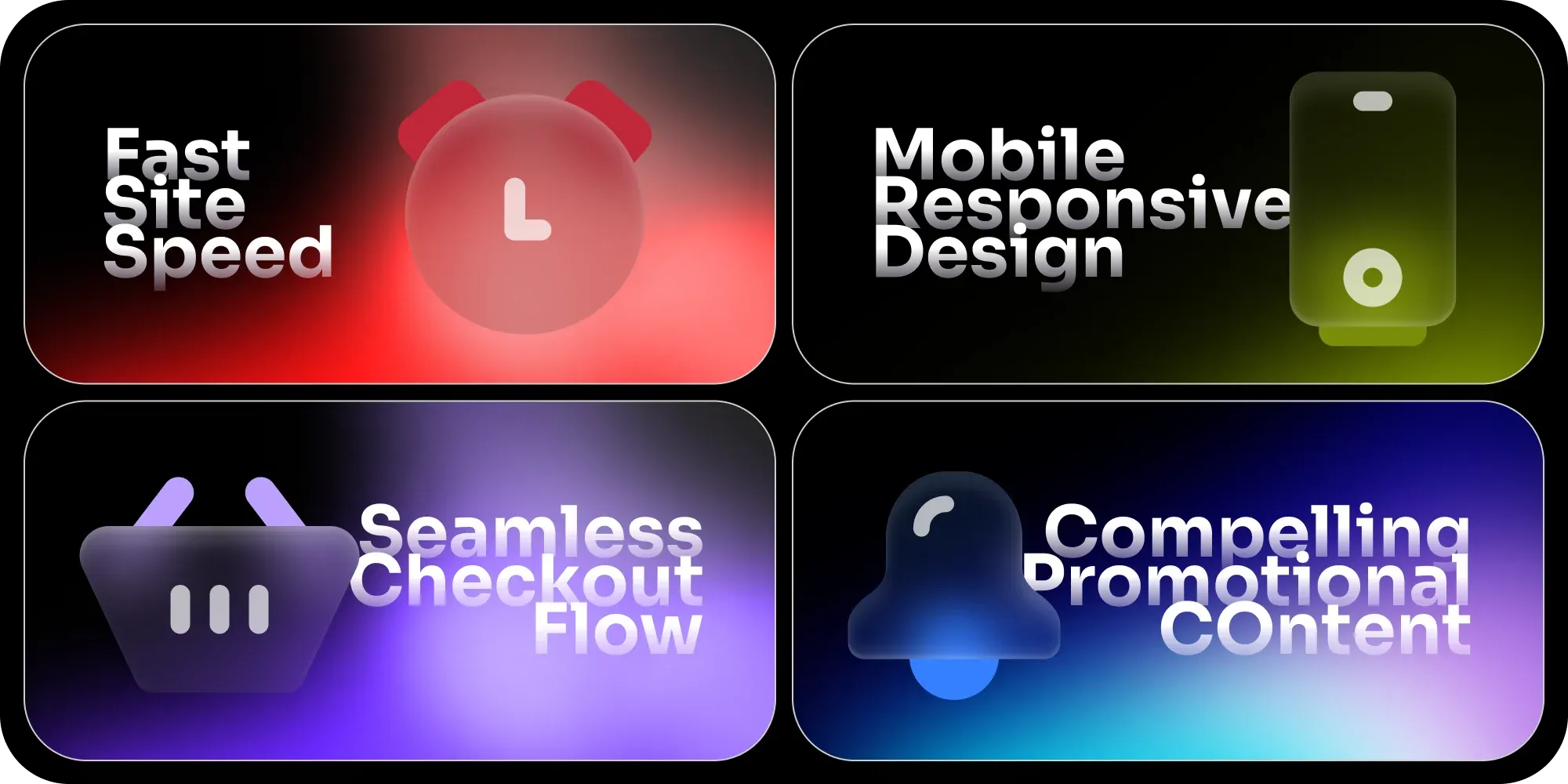
Traffic is useless if visitors bounce on arrival. Your landing pages need to be conversion-ready before anything goes live. Run through this checklist first:
- Site speed, especially on mobile connections
- Mobile responsiveness of the actual landing page
- The complete checkout flow, tested end to end
- The promotional content and offer on the page itself
A confusing site kills your ROI before a creator's audience even reaches the cart. The bar is simple: anyone, on any device, anywhere in the world, should be able to buy in a few taps.
There is a second reason this matters more in 2026. AI search engines and assistants increasingly read and act on your live experience when deciding whether to recommend you. A broken page does not just waste influencer traffic. It also undermines your ability to be surfaced confidently in AI-driven discovery, which we cover later.
Is Your Inventory and Fulfillment Stress-Tested?
A campaign that works can drain your stock overnight. We strongly recommend stress-testing inventory and fulfillment logic before launch. If an Instagram push goes viral, your supply chain has to absorb a sudden spike without a fulfillment meltdown that turns happy buyers into angry ones.
Do You Have Clear Brand and Product Guidelines?
Write a single brand guideline document before outreach. It becomes the source of truth for your internal team and every external creator. Cover your brand voice, visual style, and the key product talking points so messaging stays consistent across creators and channels.
Is Your Promo Code and Tracking Setup in Place?
Tracking is the part most brands bolt on too late, and it quietly ruins ROI math. Without unique promo codes, you are guessing where sales came from. Build the discount and code system well before you contact creators.
This matters even more if you are figuring out how to do influencer marketing as a Shopify brand. Generating unique, trackable discount codes natively in your store lets you measure each creator's performance, settle commissions fairly, and calculate true return on investment instead of vibes.
Step 1: How Do You Plan a Campaign That Actually Converts?
Planning an influencer marketing campaign that converts means committing to one measurable outcome, narrowing your audience, choosing a single flagship product, and matching your budget to the creators you can realistically support. The success of a campaign is usually decided before the first outreach email is sent.
Flying blind wastes time and money. We tell every client the same thing: do the unglamorous planning work first, because no creator can rescue a campaign with no clear goal behind it.
What Single Goal Is This Campaign Built Around?
Never launch without one measurable objective. Trying to chase awareness and conversions at once usually delivers neither. Pick the one conversion event that matters most for this campaign: a purchase, an email signup, a free-trial activation, a demo booking.
Awareness campaigns track impressions and reach. Conversion campaigns track clicks, signups, and revenue. That single choice shapes every later decision, from which creators you pick to which numbers you report.
Here is a simple way to pressure-test budget against that goal before you spend. Estimate creator cost, product cost, and an honest conversion rate, then back into a target cost per acquisition.
If a $2,000 creator deal needs 200 sales at your margin to break even, and that creator realistically drives 40, you have your answer early instead of after the invoice.
Who Exactly Are You Selling To?
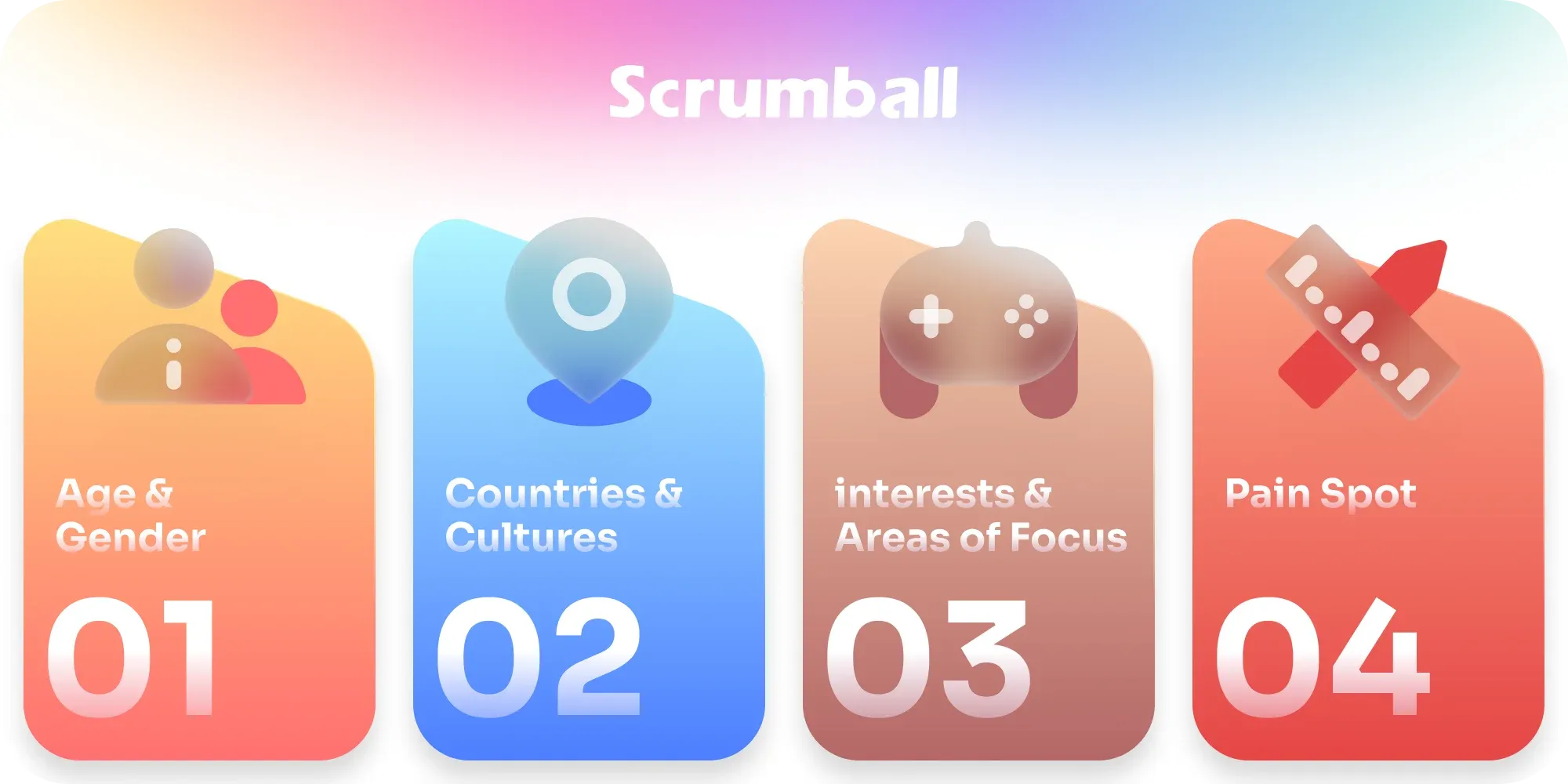
You cannot market to everyone, and the brands that try waste the most. Defining your audience is the foundation of the entire process. Before you search for creators, get specific about:
- Age and gender demographics
- Geographic location and cultural nuances
- Core interests and daily hobbies
- The specific pain points your product solves
If you do not know precisely who you are selling to, you will partner with the wrong creators and pay for the privilege. Our guide to audience targeting goes deeper if this is where you feel shaky.
Which Single Product Should You Promote?
Choose one product, not your whole catalog. A focused message converts better than a scattered one. Pick a flagship item or a new release that stands out visually on social. Creators need a clear, single story to tell, not a lineup to read out.
What Scale and Budget Can You Support?
Set your financial limits early, because budget dictates strategy. Are you gifting product to fifty micro-influencers or paying five premium creators? Factor in creator fees, product costs, shipping, and any paid amplification so you see your real resources, not the optimistic version.
Step 2: How Do You Find and Vet the Right Influencers for Your Brand?
Finding the right influencer means matching a trusted voice to your exact buyer, then verifying that the audience is real and engaged before you spend. You are not shopping for follower counts. You are looking for a creator whose community actually overlaps with your customers.
This is also where most teams get stuck. Nearly half of B2B marketers (48%) name identifying, qualifying, and connecting with the right creators as their biggest challenge, per 2025 B2B influencer research. So let us make it systematic.
Which Platform Should You Even Be On?
Your audience dictates the platform, not the other way around. If you sell B2B software, TikTok is probably the wrong room. Visual products thrive on Instagram, while detailed tutorials and high-consideration purchases do well on YouTube. Go where your customers already spend time.
How Do You Filter by Niche and Audience?
Never pick a creator on content theme alone. A fitness creator might post great workouts to an audience that never buys anything. Dig into the data behind the feed and weigh:
- Geographic location of their audience
- Age and gender distribution
- Core interests and purchasing power
- Genuine alignment with your product values
If their followers do not match your buyer profile, the endorsement is worth nothing to you, no matter how polished the content looks.
What Do the Influencer Tiers Actually Mean?
Creators are loosely grouped by follower count, and bigger is not better. This is a rough map, not a rulebook, and you will see different cutoffs elsewhere. That is normal.
- Nano (1K to 10K): high engagement and strong local trust
- Micro (10K to 100K): niche experts with loyal communities
- Mid-tier (100K to 500K): solid reach with engaged audiences
- Macro (500K to 1M): broad awareness and professional content
- Mega (1M to 5M): massive reach for viral pushes
- Celebrity (5M+): global recognition and mainstream visibility
There is no universal "best" tier. It depends on your niche, industry, product, and campaign scale. That said, we usually recommend starting with micro-influencers, and the data backs the instinct.
According to 2026 industry benchmarks, micro-influencers (10K to 100K) average around 3.86% engagement versus roughly 1.21% for mega-influencers, at meaningfully lower cost per post. Younger buyers trust peer recommendations over celebrity endorsements, which is exactly what micro creators provide.
If you want the trade-offs in full, see our take on the pros and cons of micro-influencer marketing.
Budget question, answered honestly: rates swing wildly by tier, platform, and niche. Rather than guess, ground your numbers in real ranges. Our guide to nano-influencer rates is a useful anchor for keeping your offers in a credible zone.
Solo Creators or Agencies and MCNs?
Most creators you see are solo. They may or may not work full time, they belong to no company, and you can reach out and negotiate with them directly. Others are managed by talent managers or signed to MCNs, in which case you negotiate with an agency representative instead of the creator.
How can you tell the difference? Check the contact details in their bio. A personal email usually means solo. A corporate domain or a "managed by" tag points to agency representation.
Working with individuals is often cheaper and lets you build a direct relationship. Agencies and MCNs streamline contracts and add professional accountability. The right call comes down to your goals, budget, and scale, and our guide on whether an influencer marketing agency is right for your brand can help you decide.
How Do You Vet a Creator Properly?
Fan counts and view totals stopped being a reliable signal years ago. Real vetting is an end-to-end check, not a glance at the follower number. Here is the process we run:
- Engagement over time: track engagement across content posted over a longer window, not one lucky week. A quick way to sanity-check this is an engagement rate calculator.
- Genuine comments: look for real conversations, not emoji spam. Comment quality reveals whether an audience actually cares.
- Relatively stable views: avoid creators leaning on a single viral hit.
- Community interaction: confirm the creator actually replies to their followers.
- Fraud and authenticity screening: with fake-follower fraud still rampant, screen before you pay. A fake-follower checker or a full account auditor flags inflated numbers fast.
- Brand-safety review: scan at least 90 days of content and a quick news search for past controversies that could attach to your brand.
You want partners building lasting relationships with their audience, not creators chasing follower counts.
When Should You Use a Discovery Platform?
Manual searching across social apps eats hundreds of hours, which is why teams scaling past a handful of creators switch to a dedicated influencer discovery platform.
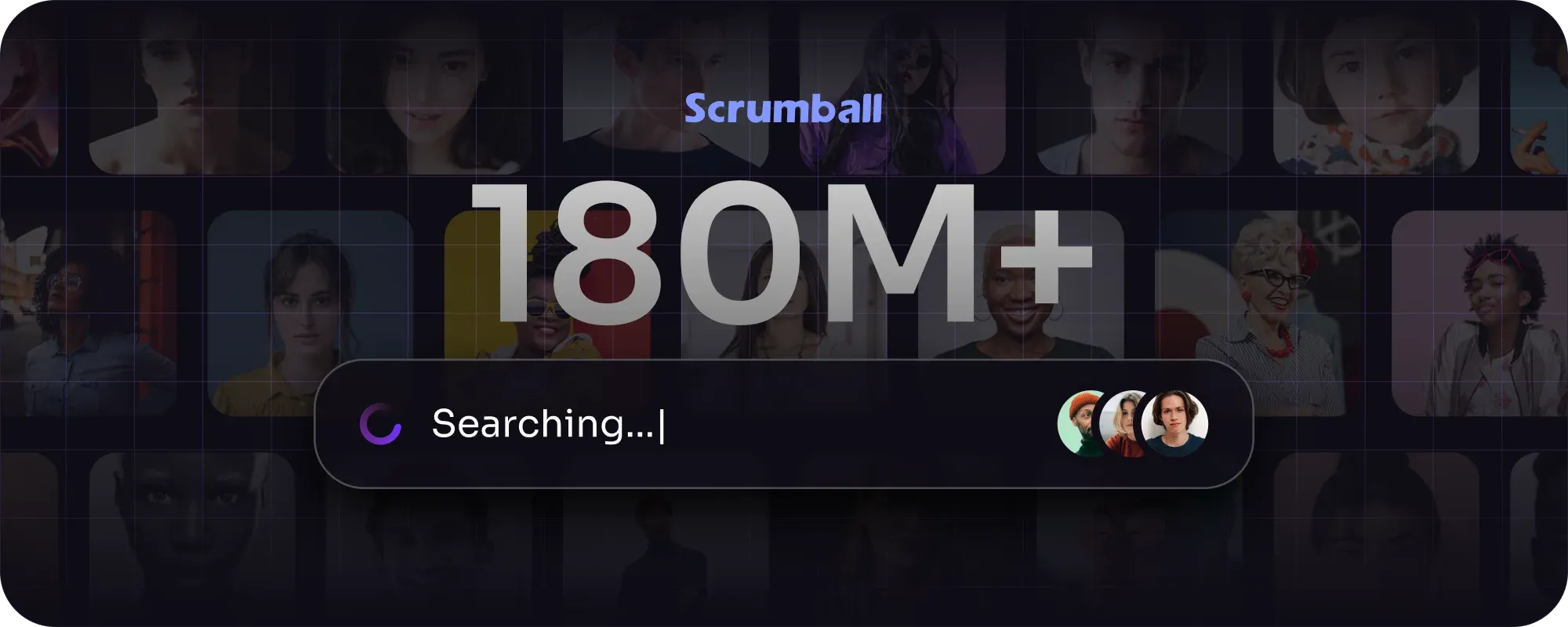
This is where Scrumball does the heavy lifting. With a database of 180M+ creator profiles, you can apply exactly the demographic and engagement filters above programmatically, instead of opening tabs for a week. The conceptual work stays yours. The grind gets automated.
Step 3: How Do You Reach Out to Influencers and Get Responses?
Getting replies starts with looking credible in the first three seconds of an inbox scan. Creators receive dozens of pitches daily, so you have to project authority immediately. Send from your official corporate domain, never a free personal email, to earn instant trust.
What Goes Into a Cold Email That Works?
A strong cold email is short, personalized, and direct. Creators do not read long corporate introductions. Open by complimenting a specific recent post, state plainly why your brand fits their content, and close with one clear ask.
Keep it tight. Your outreach should include only the essentials and skip the dense paragraphs:
- Your brand name and a one-sentence introduction
- The exact product, with a link to the product or landing page, you want them to review
- A genuine compliment about their recent work, to build connection and trust
- A clear question about their current availability
A framework like this works well as a starting point:
Hi [Name],
This is [your brand], [a short, concise intro about what your brand does].
We loved your recent video about [Topic]. Your audience deeply cares about [Value], which aligns perfectly with our new product. We would love to send you a sample for a potential paid collaboration.
Are you currently accepting new brand partners?
Why Does the Follow-Up Matter So Much?
Do not read silence as a no. Professional creators are buried in content calendars and brand deals. Large-scale cold outreach studies show a single follow-up can lift total replies by roughly 40 to 50%, and that around four in ten replies in a sequence come from follow-ups rather than the first message.
Schedule a polite follow-up three to four days after your first email. Research on outreach timing points to a two-to-five-day window as the sweet spot before that first nudge. Keep the second email short: ask if they had a chance to review your message and reiterate that you would love to work together.

At scale, tracking all of this by hand falls apart. Platforms with intelligent outreach automation let you set up sequences that handle the whole flow. The system detects a reply and stops the sequence instantly. If the first pitch is ignored, the scheduled follow-up sends on its own.
Dynamic variables keep every email feeling personal rather than mass-blasted. If TikTok is your focus, our guide on collaborating with TikTok creators covers the platform-specific etiquette.
Step 4: How Do You Manage Creators, Rights, and Approvals Without Losing Control?
Once a creator says yes, execution begins, and execution is where good campaigns quietly fall apart. Effective influencer marketing management comes down to organized communication, clear rights, and a fast approval loop.
How Do You Set a Timeline Creators Will Actually Follow?
A strict timeline keeps campaigns on track. Professional creators juggle several brand deals a week, so hand them a clear calendar: when concepts are due, when draft content needs approval, and the exact publishing date. Vague timelines slip. Specific ones hold.
What Should You Negotiate Beyond Price?
The best campaigns balance brand guidelines with creative freedom. Respect that the creator knows their audience while keeping your core message intact. And remember that negotiation is not only about fee.
Secure competitor exclusivity so they are not promoting a rival the week after your post. Just as important, agree on content usage rights up front if you plan to repurpose.
Whitelisting and paid amplification, where you run ads from the creator's own handle, can outperform brand-account ads, but only if you negotiated those rights before filming. Our guides on setting up Instagram whitelisting and the benefits and drawbacks of whitelisting walk through the mechanics.
Give every partner a comprehensive product brief so you avoid endless back-and-forth corrections. A good brief always includes:
- Key product selling points and features
- Visual do's and don'ts on style
- Mandatory tracking links and codes
- Specific legal or compliance phrases, including required disclosures
Which Compensation Model Should You Use?
Flat fees are simple but cap your downside protection if a post flops. Many performance-minded brands now use a hybrid: a smaller flat fee plus commission on tracked sales, which keeps incentives aligned and rewards top performers.
Pure performance-based affiliate deals work too, especially for creators confident in their conversion power. Set commission rates against your margin and average order value so the math stays sustainable. Our piece on combining influencer and affiliate marketing covers how to structure this.
How Should You Audit Content Before It Goes Live?
Never let a sponsored post publish without review. A content audit protects your reputation and your campaign impact. Verify these before approving anything:
- Accurate product usage and clear visual branding
- Creative freedom balanced against mandatory talking points
- Proper discount code visibility
- Compliance with official advertising disclosures
Approve quickly once it checks out. A fast, predictable approval keeps the creator happy and your launch on schedule. Consolidate feedback into one round where you can, since conflicting notes from three internal stakeholders are how timelines die.
How Do You Handle Budgets and Payments?
Handling money professionally is how you earn repeat collaborations. Loop finance in early to avoid payment delays that frustrate creators and poison future deals.
Once content is published and approved, pay on the agreed terms without dragging it out. Many brands stumble on cross-border transfers and currency conversions.
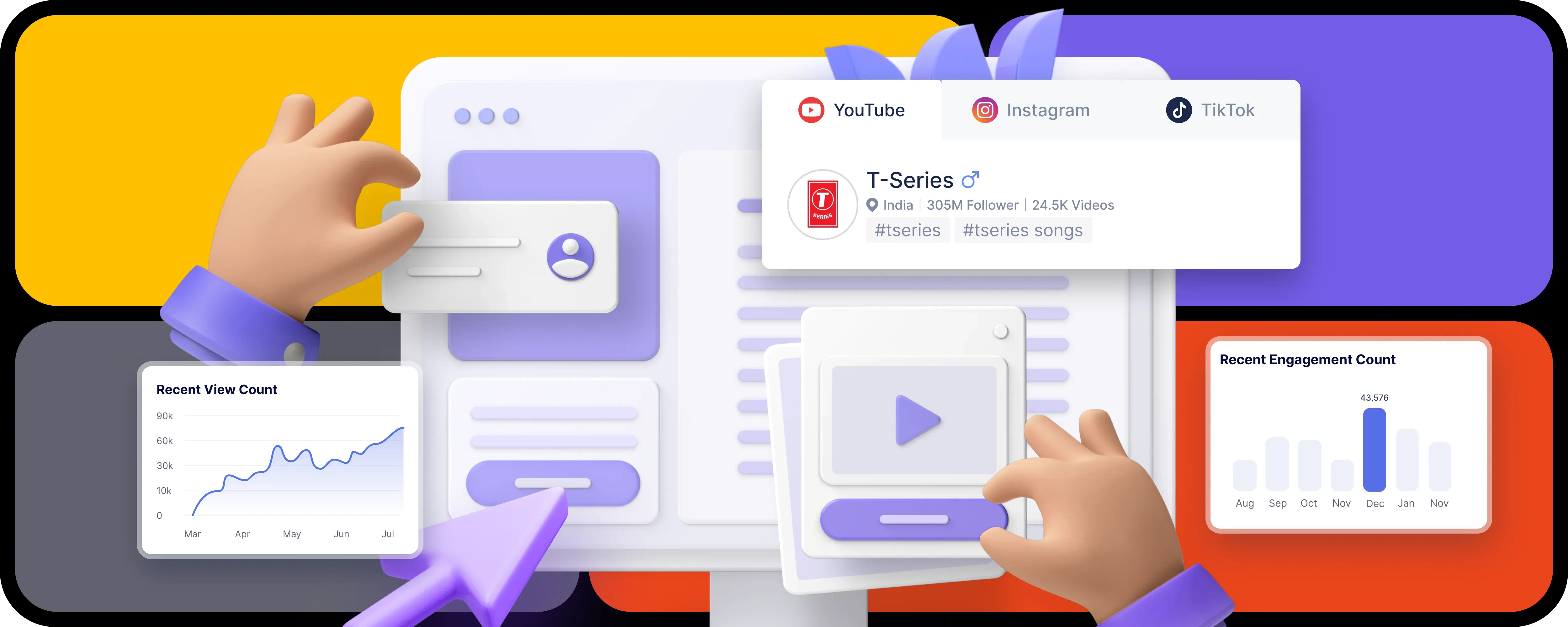
This is another spot Scrumball handles in practice. Scrumball's Influencer Payment solution automates global, multi-currency payouts, while the management workspace centralizes the campaign and approvals, so finance is not chasing wire details across time zones.
Step 5: How Do You Measure Influencer Performance and ROI?
Measuring influencer ROI means tying creator activity to a real business outcome, not stopping at likes. Launching is only half the job. Follower counts and share totals will never tell you whether the campaign actually paid back.
Which Content Metrics Should You Watch?
Track how the audience interacts with each sponsored post, because that reveals which creators genuinely hold attention. Watch:
- Total views and unique impressions
- Likes, saves, and shares
- Comment sentiment and real conversations
- Click-through rate on your links
If a post pulls huge views but almost no clicks, the content likely failed to communicate your product value. Saves and shares often matter more than raw likes, since they signal intent and reach beyond the original audience. Our guide to reading engagement rates helps you separate vanity numbers from signal.
How Do You Move Past Vanity Metrics?
A useful way to structure measurement is to score campaigns across a few clear dimensions rather than one blended number. A simple model covers six: reach and impressions, meaningful engagement, purchase attribution, audience quality, content performance, and trust or sentiment.
The trick is weighting them by goal. For an awareness launch, lean on reach, content performance, and sentiment. For a conversion push, weight purchase attribution and audience quality more heavily, and treat impressions as context, not success.
Scrumball's analytics map cleanly onto these dimensions, so you can benchmark creators against each other instead of guessing.
How Do You Attribute Sales to the Right Creator?
Awareness is nice, but revenue is the proof, and you need to know who drove it. Use custom UTM links with easy-to-read keywords plus a unique promo code for every partner, even within the same campaign.
Standardize your UTM naming so reports stay clean. A common convention is utm_medium=influencer for organic creator posts and utm_medium=paid_influencer for content you boost, with a campaign name that includes the promotion and date.
Pair UTMs with promo codes to catch conversions where no link was clicked, like when someone searches your brand on another device and still uses the creator's code at checkout.
One caution: single-touch attribution undercredits influencers, since a creator often plants the seed weeks before purchase. Look at conversions across a 30-to-90-day window to capture that lag rather than only same-session sales.
What Does the ROI Math Actually Look Like?
Keep the core formula simple: ROI = (Revenue minus Cost) divided by Cost, times 100%. If a creator costs $2,000 and generates $12,000 in tracked revenue, that is a 500% ROI. Run that per creator, then scale spend toward the winners and renegotiate or pause the laggards.
For senior stakeholders, translate this into the language they use: how fast does gross profit from influencer-acquired customers pay back the acquisition cost, and how does that payback compare with your other channels?
That bridge between social metrics and CAC payback is what gets influencer budget approved. Our deeper dive on influencer marketing ROI and the earned media value guide expand on both.
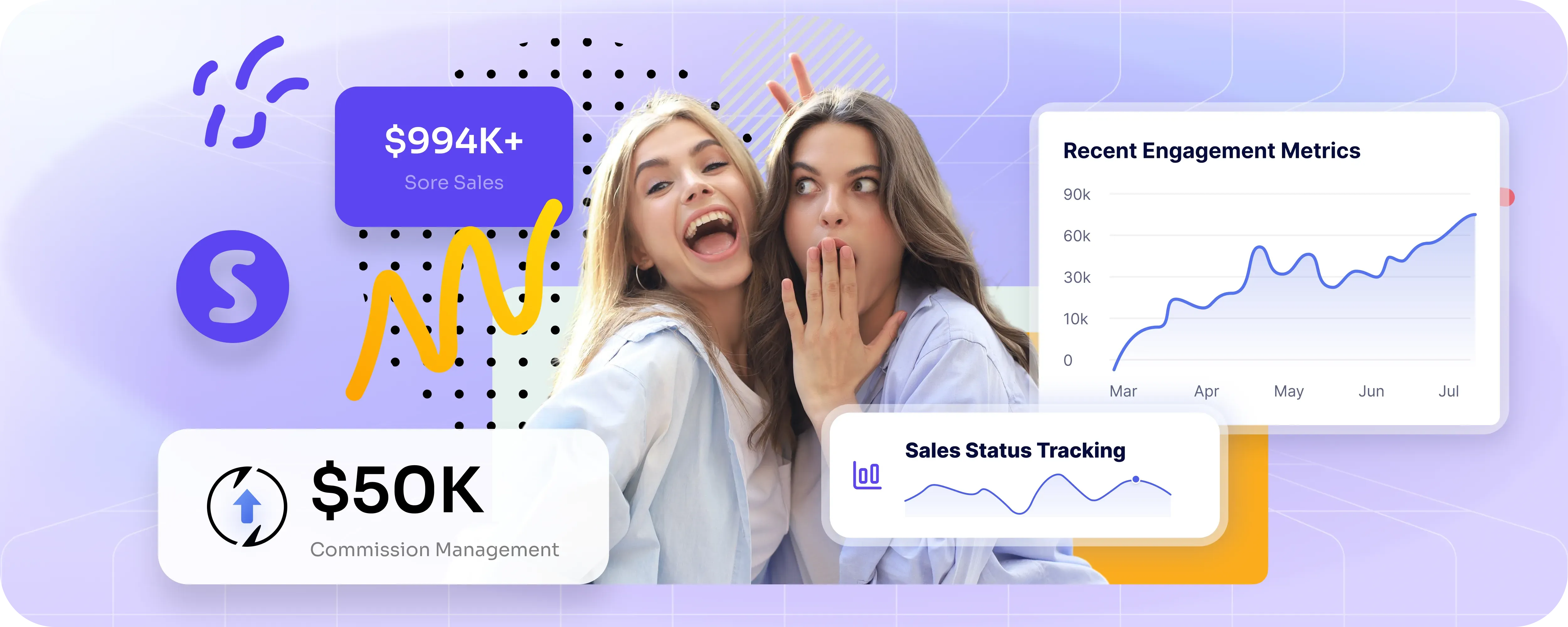
Across multiple campaigns and dozens of creators, doing this in spreadsheets costs hours every week. A performance tracking platform pulls the data in real time, surfaces your top performers, and lets you scale what works without the manual reconciliation.
Step 6: How Do You Make Influencer Marketing a Repeatable Team Engine?
A campaign that scales is one your team can run again without reinventing it. Marketers, creative directors, campaign leads, and finance all have to move together. That coordination is the difference between one good campaign and a repeatable system.
Set internal communication rules before you launch anything. A few that consistently prevent chaos:
- Assign a single point of contact for each creator negotiation
- Define clear approval hierarchies for budgets and creative assets
- Share real-time updates on campaign progress, content status, release schedule, and logistics
As your team grows, scattered chats, docs, and spreadsheets stop scaling, and predictable bottlenecks appear:
- Overlapping outreach, where two colleagues pitch the same creator
- Slow approval cycles that leave both your team and creators waiting
- Outdated data and costly errors from shared documents
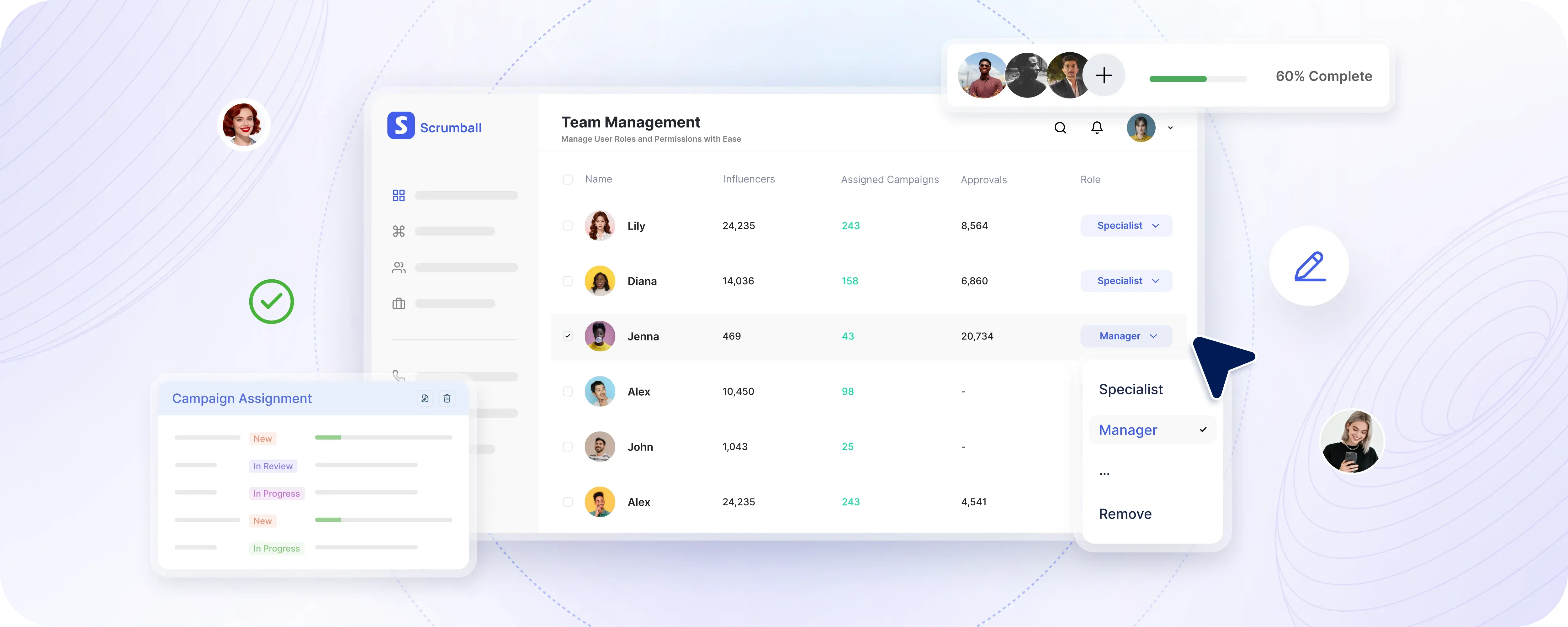
Moving to a workspace built for influencer marketing team collaboration clears these out. Everyone sees the same contact history, approval logs, and payment status in real time, which turns a chaotic workflow into a predictable engine.
That shift is also what makes long-term creator relationships possible, and as our look at short-term versus long-term partnerships shows, the long game usually wins.
Are You FTC-Compliant? The Disclosure Rules Brands Get Wrong
The FTC requires any material connection between a brand and a creator to be disclosed clearly and conspicuously, and the brand is on the hook alongside the influencer. This is the part teams treat as a checkbox right up until an enforcement letter arrives.
The rules live in the FTC's Endorsement Guides (16 CFR Part 255). A "material connection" means anything that could sway the endorsement: payment, free product, affiliate commission, ambassador status, or a personal relationship. If a creator received something of value, the audience has to be told, in plain language, before they engage with the content.
A few specifics brands miss most often:
- Platform tools like Instagram's "Paid Partnership" label help, but the FTC has signaled they are not sufficient on their own. You still need a clear disclosure in the caption.
- "Clear and conspicuous" means unmissable. A #ad buried in a wall of hashtags does not count. For video, disclose verbally near the start and keep it visible, and put it in every Story frame, not just the first.
- Every platform and format needs its own disclosure. The same campaign on TikTok, a Reel, and a YouTube Short each requires one.
- AI-generated and virtual-influencer endorsements now fall under the same rules, and recent guidance asks brands to disclose when AI significantly generates or alters endorsement content.
The cleanest way to stay compliant is to build disclosure into three places rather than policing it after the fact: the brief (give creators copy-ready disclosure language), the contract (make compliance a term), and a post-launch check (confirm it actually appeared).
The official FTC Disclosures 101 for Social Media Influencers is the baseline reference worth sending every partner. Penalties for getting this wrong run well into five and six figures per violation, and the reputational damage lasts far longer than the fine.
How Influencer Content Now Feeds Search and AI Discovery
In 2026, influencer content is not just social content. It is search inventory. People discover products inside TikTok, YouTube, and Reddit as readily as they do on Google, and nearly half of US consumers (49%) now use TikTok as a search engine.
Discovery has decentralized across three surfaces at once:
- Classic search: Google and Bing, still the largest source of intent
- Social search: TikTok, YouTube, Instagram, and Reddit used as discovery engines
- AI answers: summaries from ChatGPT, Claude, Perplexity, and Gemini
Optimizing for that last surface has a name, Generative Engine Optimization, and creator content quietly powers all three. Here is how it feeds each one:
- Branded search lift: when creators name your brand, they raise branded search volume, which strengthens your brand-query rankings and click-through.
- SEO signals: content that earns embeds and discussion picks up backlinks and dwell time, which helps classic search.
- AI citations: question-led creator content that mirrors how people actually ask things gets pulled into AI answers, reaching buyers who never open a results page.
To capture this, brief creators with search intent in mind:
- Assign each partner a real question your prospects type.
- Have them answer it naturally in the script, caption, and on-screen text.
- Fold it into your broader influencer marketing strategy rather than treating it as a separate channel.
This also closes the loop back to Step 0. AI engines do not just read your site, they act on it when deciding whether to recommend you. A broken checkout or a slow page tells those systems you are a risky recommendation, so readiness and discoverability are now the same project.
What Does a Winning Influencer Strategy Look Like in 2026?
A winning influencer strategy is a reliable business system, not a lucky viral hit. The brands that compound results build something repeatable, and you can see the difference from three angles: the brand's, the audience's, and the creator's.
For Brands
- Actionable: it spells out the daily steps for outreach, negotiation, and approval so campaigns keep moving.
- Repeatable: it runs on documented workflows rather than viral luck, so your team can launch consistently.
- Measurable: you can prove results with metrics like cost per acquisition, link clicks, and revenue from unique tracking links.
- Scalable: it handles bigger budgets and larger rosters through automation, without spreadsheet burnout.
For Your Audience
- Relatable: it creates genuine connection. Audiences want real people using your product in everyday life, not scripted commercials.
- Expertise: the creator actually understands your niche and shows real product knowledge, which is what convinces a skeptical viewer.
- Transparent: every paid partnership is clearly disclosed, which builds long-term trust instead of tricking viewers.
- Integrity: the partnership makes sense. When a creator promotes something that contradicts their past content, audiences spot the cash grab instantly.
- Originality: copy-paste scripts work once. Lasting results come from content that genuinely fits both the creator and the product.
For Influencers
- Freedom: creators get the creative control to make authentic content. Micromanaging the script kills their voice and makes the post feel fake.
- Clarity: a detailed brief means they know exactly what to deliver, when, and what outcome you expect.
- Frictionless: approvals are fast, communication is centralized, and payment lands automatically once the agreed terms are met.
- Sustainable: you build long-term relationships instead of extracting a single post, treating creators as real business partners.
- Aligned: you choose creators whose values and content naturally match your product, so they feel proud to represent you.
Which Platform Fits Your Goal? YouTube vs Instagram vs TikTok vs Facebook vs LinkedIn
No two platforms serve the same purpose, so a successful social media influencer marketing strategy adapts to the culture, audience, and format of each one. Use the table below to match the platform to your goal, then meet buyers where they already spend time.
| Platform | Best for | Top formats | Audience and key notes |
|---|---|---|---|
| YouTube | Evergreen, high-intent reach | Long-form video plus Shorts | Loyal, search-driven audiences and high production value. Needs larger budgets and longer timelines, but content ranks in search and keeps selling for years. |
| Visual discovery and conversion | Reels for discovery, Stories for links | Home of fashion, beauty, and consumer goods, spanning nano to celebrity. Deals are straightforward, but vet hard for fake followers. | |
| TikTok | Authentic, fast growth | Short-form video, trends, audio | Rewards raw authenticity over polish, needs a hook in the first three seconds, and favors watch time and shares. Can clear inventory overnight. |
| Broad reach and community | Video, Groups, Live, Reels | Strong with older millennials and Gen X, and for local, community, and home, family, or finance niches. Pairs with Instagram through Meta's shared tools. | |
| B2B decision-makers | Text posts, case studies, carousels | Where professionals discover tools and enterprise buyers can be reached. Lead with genuine experience and measure by the roles and companies engaging, not impressions. |
If TikTok is central to your plan, get clear on what a TikTok influencer is and the trade-offs of the platform before committing budget.
Plan for Repurposing From the Start
Whatever the platform, build reuse into the deal. With the usage rights you negotiated in Step 4, a single strong TikTok can become Reels, Shorts, Stories, Facebook video, paid ads, and on-site content.
Planning multi-channel repurposing up front is one of the cheapest ways to multiply ROI from one piece of creator content.
Common Mistakes That Kill Influencer Programs
Knowing the steps is half of it. The other half is avoiding the errors that quietly torch budgets. These are the ones we see most often.
Launching Without Clear Goals and KPIs
Starting a campaign with no defined expectations means you cannot say what success looks like. Decide exactly what you want the creator to achieve, whether that is view count, engagement, or conversions, before you sign anything. Vague goals produce vague results.
Partnering With Mismatched Values
A campaign collapses when a creator contradicts your core values. Audiences are sharp and spot an inauthentic pairing immediately. If a vegan brand sponsors a creator famous for barbecue, the message gets rejected and your credibility takes the hit.
Picking a Creator Without Real Assessment
Never choose an influencer on follower count alone. Skipping the vetting from Step 2 leaves you exposed to fake engagement and bot networks. Audit their audience demographics and comment quality so you know you are reaching real potential customers, not inflated numbers.
Over-Restricting Creative Freedom
One of the best things you can do is stop micromanaging. Pile on creative limitations and you turn an authentic creator into a robotic salesperson. You hired them because they know their audience, so give them room to deliver your message in their own voice.
Ignoring FTC Disclosure Rules
Skipping disclosure is the most expensive mistake on this list, because the brand is liable alongside the creator. Missing or unclear sponsorship tags can mean serious fines and lasting reputational damage, and the risk multiplies when you work with creators overseas under different rules.
We covered exactly how to stay compliant in the FTC section above, so treat it as non-negotiable rather than a nice-to-have.
Conclusion
A profitable influencer program comes from a systematic approach to discovery, outreach, management, and measurement, not from chasing one viral moment. The throughline across all six steps is the same: treat creators as business partners, and the results start to compound.
The catch is operational. Run this through spreadsheets and scattered chats and it will slow your team to a crawl as soon as you scale past a handful of creators.
You need real infrastructure for that. Scrumball is an all-in-one influencer marketing platform built for marketing teams to discover and vet creators, automate outreach, centralize communication, and track campaign ROI in real time. Build the system first, and the growth follows.
FAQs About Influencer Marketing
How do you do influencer marketing like a pro?
Treat creators as long-term partners, not ad slots. Set one measurable goal, define your audience, brief every partner with disclosure-ready language, and vet on real engagement rather than follower count. Track each with UTM links and promo codes. At scale, a platform like Scrumball keeps it repeatable.
How do you measure the success of an influencer marketing campaign?
It depends on your goal. For awareness, track reach and impressions; for sales, weight conversions and attributed revenue. Use unique UTM links and a promo code per creator, and look across a 30-to-90-day window. The core math: ROI equals revenue minus cost, divided by cost.
How much does it cost to start influencer marketing?
It varies widely. Product gifting with nano-creators can cost little beyond inventory and shipping, while paid micro-influencer posts often run from a few hundred to several thousand dollars. Many brands blend a small flat fee with sales commission. Ground offers in real rate benchmarks.
How do you find authentic influencers in your niche?
Look at engagement rate, comment quality, and genuine community interaction, not raw followers. Review at least 90 days of content for consistency, and screen for fake followers before paying. A discovery platform filters by audience demographics instantly, and an account auditor confirms an account is real.
Are micro or macro influencers better for ROI?
For most performance campaigns, micro-influencers win. 2026 benchmarks put micro engagement near 3.86% versus about 1.21% for mega-influencers, at lower cost per post. Macro creators still suit broad, fast awareness. Match the tier to your goal.
What are the FTC rules for influencer marketing?
Disclose any material connection (payment, free product, commission, or ambassador status) clearly and conspicuously under the FTC's Endorsement Guides. Brands are liable too, platform labels alone are not enough, and AI-generated endorsements are covered. Build disclosure into the brief, contract, and a post-launch check.
What are the best influencer marketing practices in 2026?
Prioritize authentic, long-term partnerships with niche creators, lean into short-form video, and treat influencers as collaborators. Use AI for discovery, outreach, and measurement, and brief creators with real search questions so content also surfaces in social and AI search. Insist on clear disclosures and rigorous ROI tracking.