
Influencer marketing has evolved from an experimental digital tactic into the operating system of modern commerce. By the end of 2025, the industry valuation had surpassed $24 billion, and in 2026, it showed no signs of slowing down. Businesses are pouring more resources into this strategy because the math works: on average, brands earn $6.50 for every $1 spent.
But the landscape has matured. The days of simply paying a celebrity for a static Instagram photo are over. Success in 2026 depends on navigating new challenges, like AI-generated fraud and rising creator fees, while capitalizing on innovations like Social Commerce (TikTok Shop) and hyper-niche nano-influencers. Understanding this dual reality of immense benefits and complex challenges is the key to building a profitable strategy.
Understanding Influencer Marketing in 2026
Definition and Evolution
Influencer marketing is the practice of collaborating with digital creators who have built deep trust within a specific community. It has shifted from a "broadcasting" model to a "community-first" model. Today, authenticity and relatability take center stage. You have likely noticed how brands now seek influencers who don't just hold a product, but integrate it seamlessly into their daily lives and raw, unedited vlogs.
To thrive in this evolving landscape, brands must do more than keep up; they must anticipate. From leveraging hyper-niche micro-communities to navigating the rise of AI-generated creators, the definition of "influence" is expanding.
Key Trends Defining Influencer Marketing 2026
1. The Nano-Influencer Powerhouse
Bigger isn’t always better. Nano-influencers (1k-10k followers) are proving that smaller audiences deliver the highest ROI. Their followers view them as peers rather than celebrities, leading to engagement rates that often double or triple those of macro-influencers. For brands, this means higher conversion rates at a fraction of the cost.
2. Social Commerce Integration
The gap between discovering a product and buying it has collapsed. With the maturity of TikTok Shop and YouTube Shopping, creators are now direct sales channels. Users can watch a review and check out without ever leaving the app.
3. AI-Driven Matching and Analytics
Artificial intelligence is removing the guesswork. AI tools now analyze billions of data points to find the perfect creator whose audience demographics exactly match your buyer persona, predicting campaign ROI before a contract is even signed.
The Benefits of Influencer Marketing in 2026
1. Bypassing Ad Fatigue to Build Trust
Consumers actively avoid traditional ads. They use ad-blockers, skip pre-rolls, and scroll past banners. However, they willingly consume content made by their favorite creators. Because the influencer has already established a relationship with the viewer, the brand message bypasses the consumer's natural "ad defense" mechanism. This "Trust Transfer" is the most valuable asset in modern marketing.
2. Content Production at Scale
Hiring a creative agency for a professional photoshoot can cost tens of thousands of dollars. When you hire 10 micro-influencers, you are essentially hiring 10 production studios. The User-Generated Content (UGC) they create can be repurposed for your website, email newsletters, and paid social ads, drastically lowering your overall content production costs.
3. Unmatched ROI and Cost-Effectiveness
Influencer marketing is highly targeted. Instead of paying for a billboard that everyone sees but few care about, you pay to reach a highly qualified audience. When you combine this precise targeting with the relatively low cost of micro-influencers, the Return on Investment (ROI) consistently outpaces traditional digital ads.
| Metric | Influencer Marketing | Traditional Digital Ads (PPC) |
|---|---|---|
| Trust Factor | High (Peer-to-Peer recommendation) | Low (Corporate messaging) |
| Ad-Blocker Risk | Zero (Native content) | High (40%+ of users block ads) |
| Content Value | Dual Value (Reach + Usable Assets) | Single Value (Reach only) |
The Challenges You Must Navigate When Doing Influencer Marketing
1. Fake Followers and Bot Fraud
As the industry grows, so does fraud. Influencers who artificially inflate their follower counts using bot farms can drain your marketing budget. If you pay for a post that reaches 100,000 bots, your ROI is zero. Mitigating this requires specialized AI auditing tools (like Scrumball or HypeAuditor) to verify an audience's "Quality Score" before signing a contract.
2. The Rising Cost of Creators
As brands have realized the value of creators, influencer fees have skyrocketed. What cost $500 in 2022 might cost $1,500 in 2026. Furthermore, creators now charge additional fees for "Usage Rights" (the right for the brand to use the content in paid ads). Brands must negotiate fiercely and lean into long-term contracts to lock in favorable rates.
3. Loss of Brand Control
When you hire an influencer, you surrender total creative control. If you force a creator to read a rigid corporate script, the video will fail because it lacks authenticity. However, giving them freedom runs the risk of off-brand messaging. Finding the balance between providing a "Mood Board" rather than a "Rule Book", which is a delicate operational challenge.
4. Complex Attribution (Tracking ROI)
The "Dark Funnel" makes tracking difficult. A user might watch a TikTok review of your product, close the app, and buy it on Google three days later. Your analytics will credit "Google Search" for the sale, not the influencer. Brands must use promo codes, affiliate links, and post-purchase surveys ("How did you hear about us?") to accurately measure impact.
How to Build a Winning Influencer Marketing Strategy in 2026?
Building a successful program requires more than just sending free products; it demands a structured, data-first approach. If your team is scaling up or building a program from the ground up, we highly recommend reading our step-by-step breakdown on how to do influencer marketing effectively.
To stay ahead of the competition this year, integrate these three core strategies into your playbook:
1. Shift to Long-Term Ambassadorships
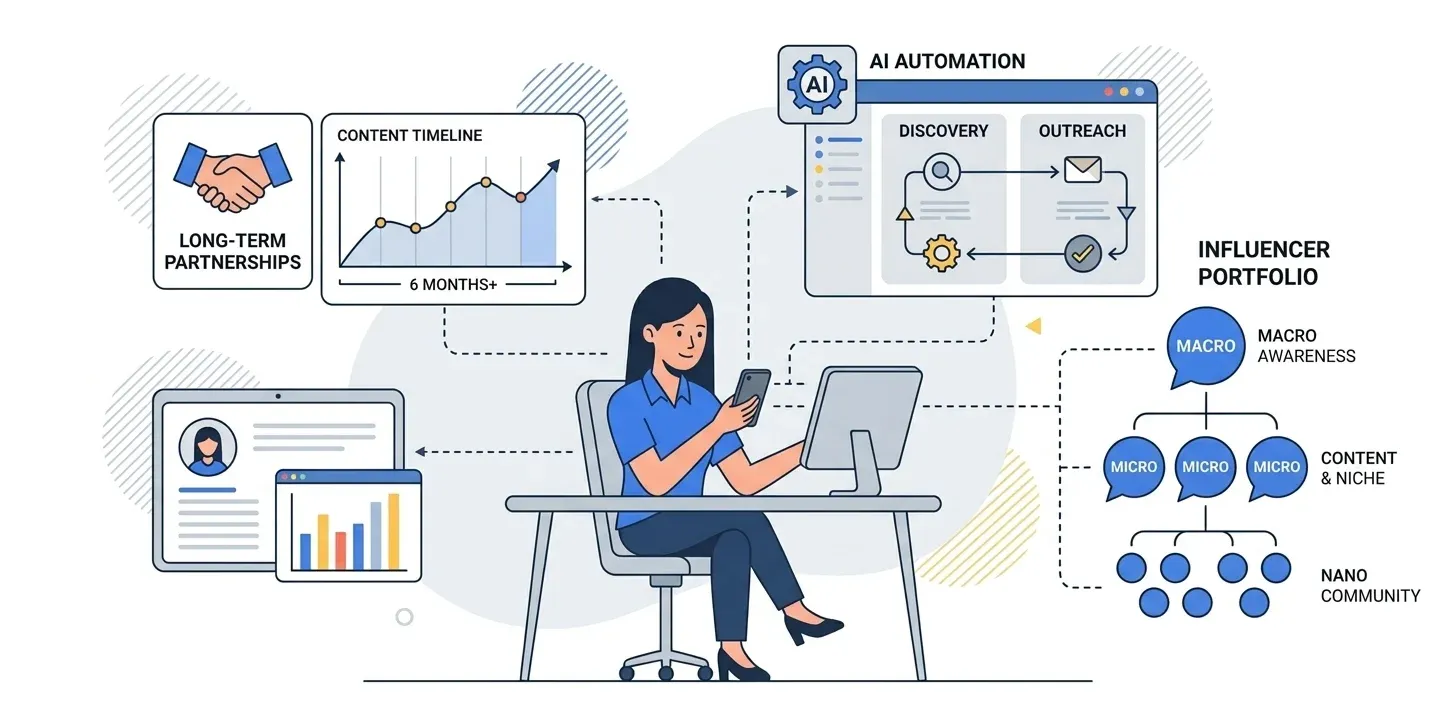
The era of the "one-off post" is dying. Long-term partnerships build superior trust. When an audience sees a creator use a product consistently over six months, the authenticity is unquestionable. Additionally, securing a 6-month retainer usually gets you a better "per-post" rate from the creator.
2. Leverage AI for Workflow Automation
Do not manage campaigns on spreadsheets. AI-powered influencer management can now automate the discovery, outreach, and contract phases of your campaign. By allowing AI agents to handle the administrative heavy lifting, your team can focus on creative strategy and relationship building.
3. Diversify Your Influencer Portfolio
Do not put your entire budget into one Mega-Influencer. Use a "Portfolio Approach":
- 1 Macro-Influencer: For massive top-of-funnel brand awareness.
- 5 Micro-Influencers: For high-quality content production and niche credibility.
- 20 Nano-Influencers: For deep community engagement and direct conversions.
Conclusion
Influencer marketing in 2026 is a high-stakes, high-reward ecosystem. The benefits, including authentic trust, scalable content, and massive ROI, far outweigh the risks of fraud and rising costs, provided you have the right strategy. By leveraging data-driven tools, prioritizing long-term relationships, and embracing the shift toward social commerce, your brand can turn influence into a sustainable revenue engine.
FAQ
Is influencer marketing still just a trend in 2026?
No. With a market valuation exceeding $24 billion and major platforms (TikTok, Instagram, YouTube) building their entire e-commerce infrastructure around creators, influencer marketing is now a permanent pillar of modern digital commerce.
How do I know if an influencer has fake followers?
Do not rely on the raw follower count. Check their engagement rate (likes/comments divided by followers). If someone has 100k followers but gets 12 likes per post, the audience is likely fake. Always use an audience auditing tool before signing a contract.
Are micro-influencers better than celebrities?
For conversions and sales, yes. Micro-influencers (10k-100k followers) have highly engaged, niche audiences that view them as peers rather than distant celebrities. They also offer a much lower Cost Per Acquisition (CPA) than a celebrity endorsement.
What is the biggest mistake brands make?
Micromanaging the creative process. Brands often provide strict, corporate scripts to creators. This destroys the authenticity that made the creator popular in the first place, resulting in poor campaign performance. You must trust the creator to speak to their audience in their own voice.
What platforms work best in 2026?
TikTok is best for viral reach and direct social commerce (TikTok Shop). Instagram is ideal for aesthetic lifestyle branding and Link-in-Bio conversions. YouTube is unmatched for deep, educational product reviews and long-term SEO value.