

In 2026, email marketing automation is crucial for small business growth. With 76% of companies using automation to cut repetitive tasks, the gap widens. Automated emails can boost revenue by 320% (Source: Tabular Email Stats). The challenge isn’t finding a tool, but the right one. Modern platforms offer AI writing, predictive analytics, and CRM integrations.
This guide reviews top email marketing automation tools to help you streamline campaigns and scale efficiently.
1. Scrumball: Best for AI Influencer Email Outreach Automation
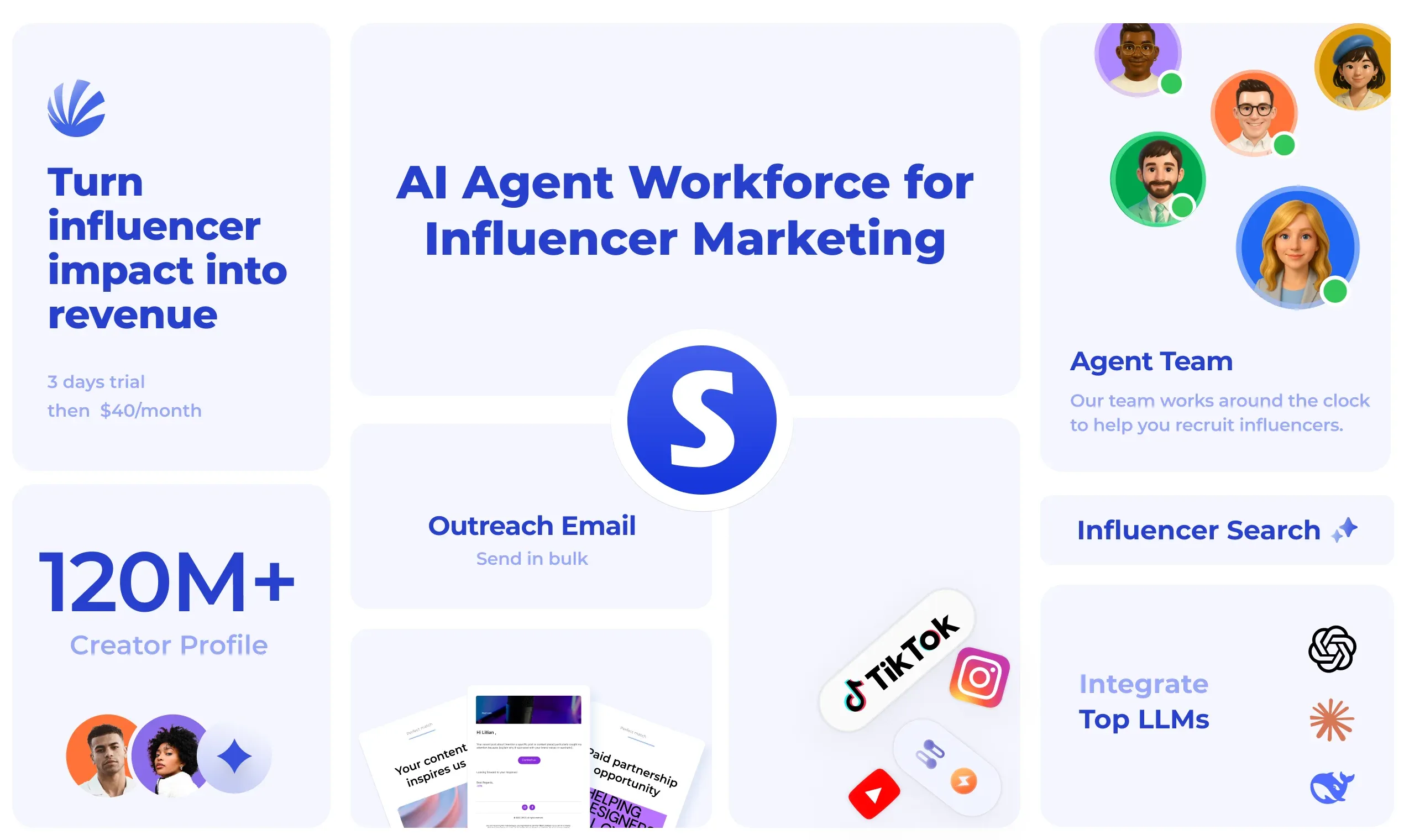
Best For: Influencer outreach, cold email automation, and partnership management.
Unlike traditional newsletter tools, Scrumball transforms email marketing automation for outbound campaigns. It’s built for brands aiming to nurture relationships, not just blast lists. Its AI agent, Charlie, manages the entire email lifecycle, crafting hyper-personalized pitches, scheduling automated follow-ups, and tracking open rates.
In 2026, with "authenticity" reigning supreme, Scrumball’s ability to send 1:1 personalized emails at scale makes it essential for modern marketing teams.
- Pros: AI-driven writing and personalization, automated follow-up sequences, integrated 120M+ influencer database, multi-language templates.
- Cons: Focused on outreach and relationship-building, not mass e-commerce newsletters.
- Pricing: Generous Free Plan; Starter plan from $32/mo.
2. Mailchimp: Best Email Marketing Platform for Beginners
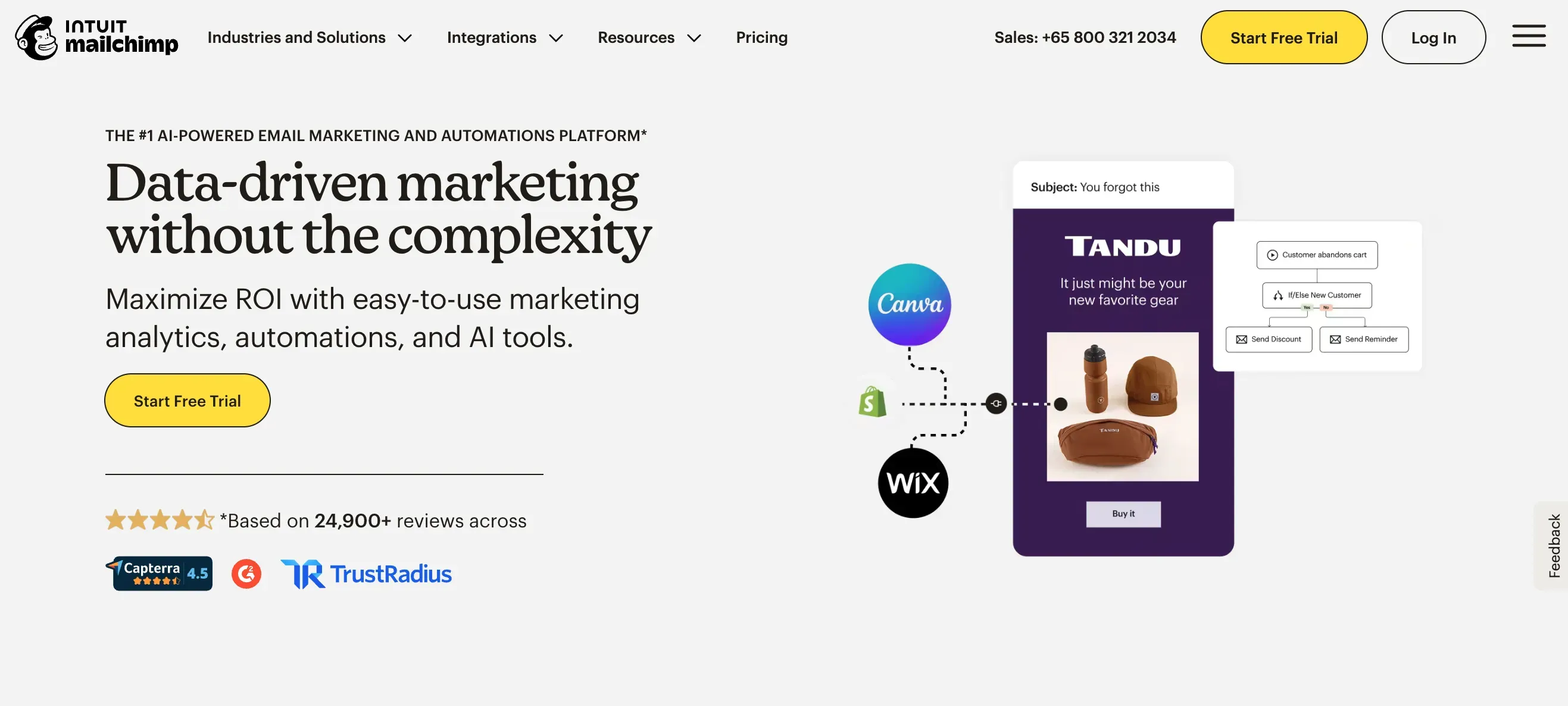
Mailchimp remains one of the most popular email marketing services for beginners. It offers a clean interface, ready-to-use templates, and basic automation workflows that make it an ideal beginner email marketing automation tool.
Its strengths lie in simplicity, pre-built journeys, and strong integration. Small businesses can quickly launch campaigns without technical knowledge.
Pros:
- Easy-to-use interface
- Large template library
- Free plan available
Cons:
- Limited advanced automation
- Pricing increases with contacts
Pricing: Free for 14 days, then it starts at $20/month (0-500 contacts)
3. ActiveCampaign: Best for Advanced Email Automation Workflows
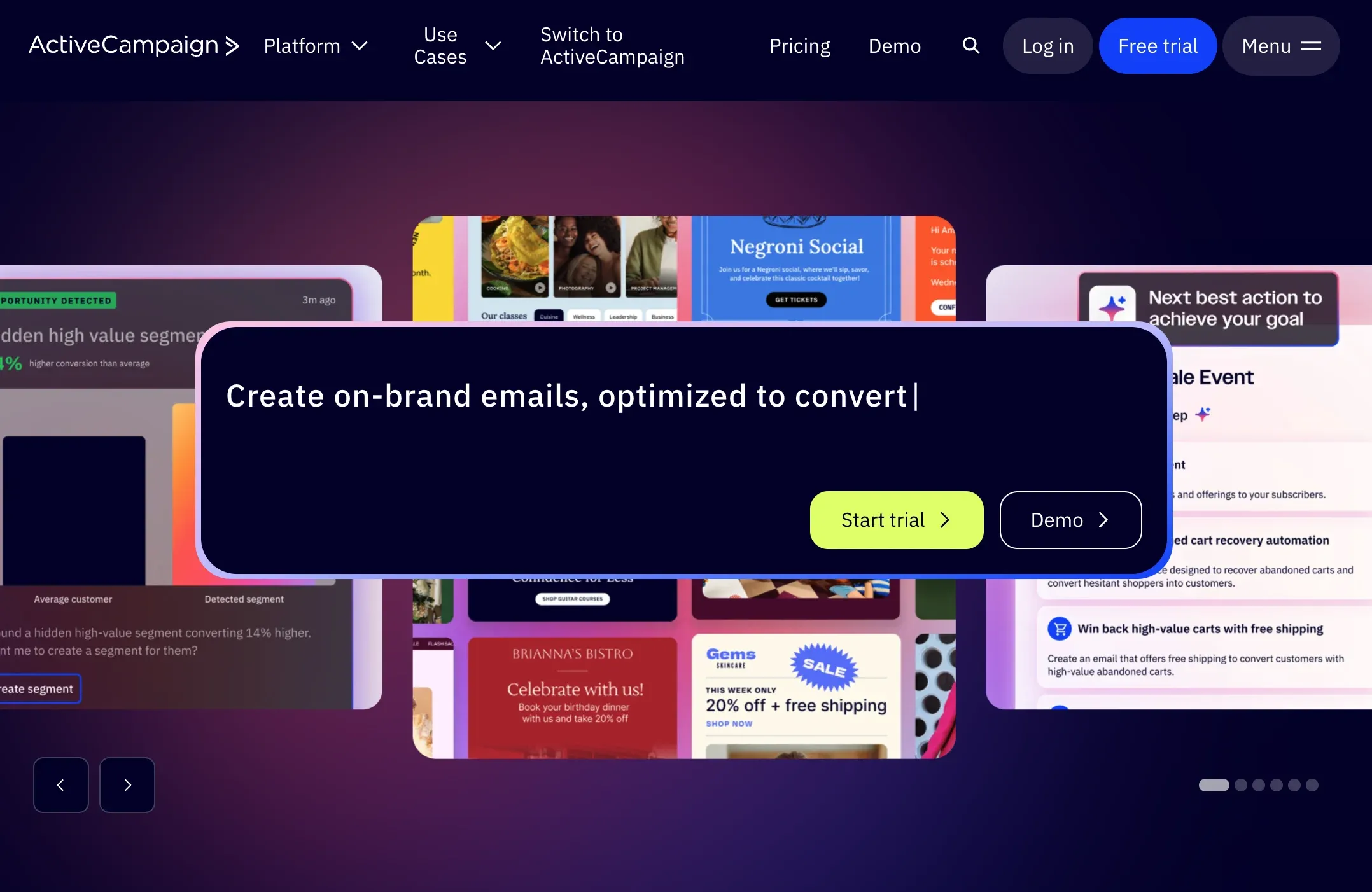
ActiveCampaign is known for its advanced email automation workflows and powerful segmentation capabilities. It excels at customer journey automation, allowing businesses to create highly personalized sequences.
For example, you can build a lead-nurturing funnel that automatically sends emails based on user behavior, such as website visits or purchases.
Pros:
- Powerful automation builder
- Advanced segmentation
- CRM integration
Cons:
- Steeper learning curve
- Higher pricing tiers
Pricing: Starts at $15/month (Starter)
4. HubSpot Marketing Hub: Best All-in-One CRM Email Marketing Automation
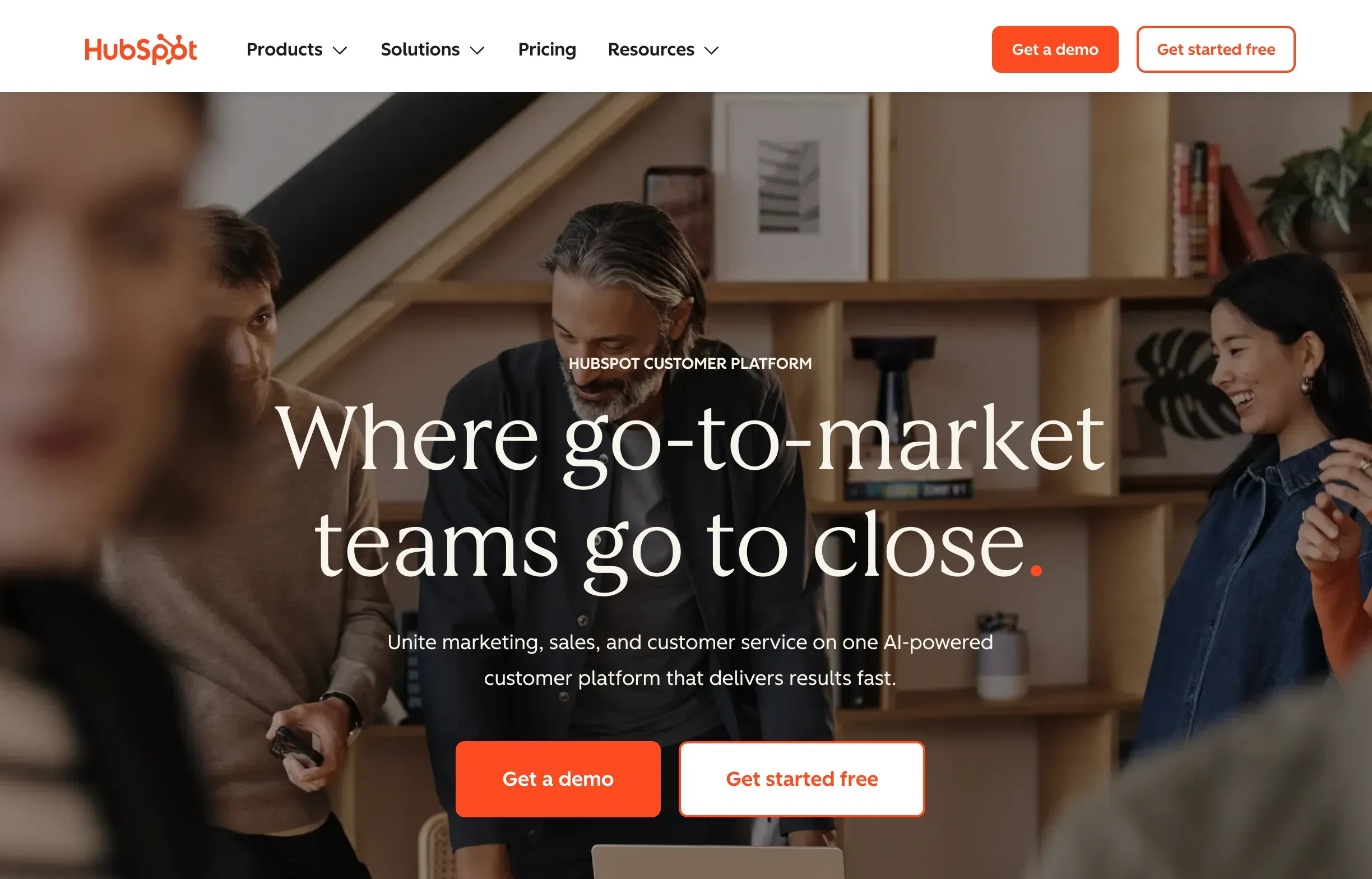
HubSpot Marketing Hub is a comprehensive CRM, email marketing, and automation platform designed for businesses that want everything in one place.
Pros:
- All-in-one marketing platform
- Strong CRM integration
- AI-powered insights
Cons:
- Expensive for small businesses
- Overkill for simple needs
Pricing: Generous Free tools or starts at $9/mo, billed annually
5. Brevo (formerly Sendinblue): Best for Transactional Email Automation
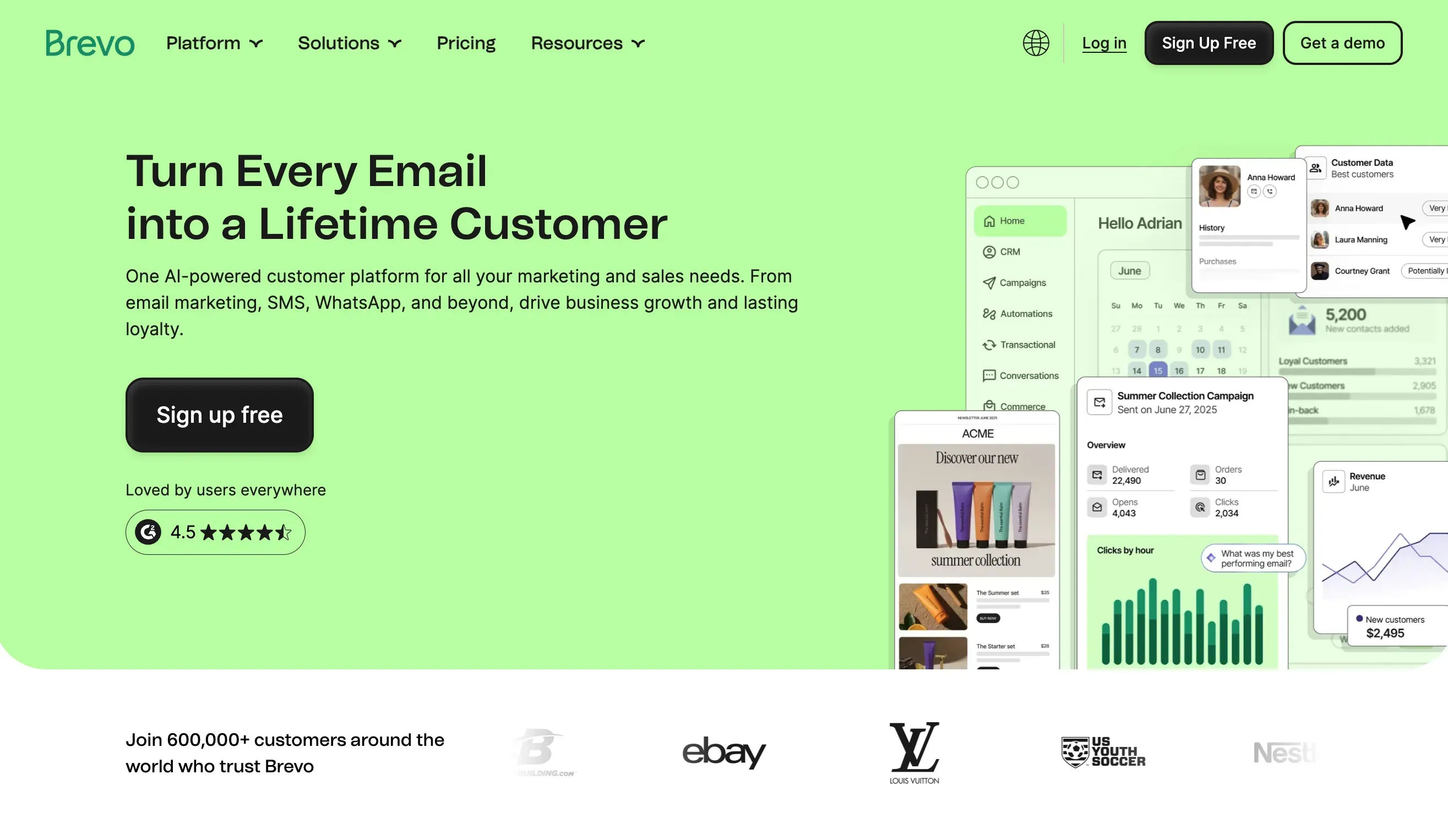
Brevo is a powerful email marketing automation software known for its transactional email capabilities. It’s ideal for businesses that need both marketing emails and system-triggered messages, such as order confirmations.
Its pricing is based on email volume rather than contacts, making it cost-effective for businesses with large lists but moderate sending frequency.
Pros:
- Volume-based pricing
- Strong transactional email features
- SMS marketing included
Cons:
- Limited templates
- Template builders are less flexible than some competitors.
Pricing: Free (300 emails/day) or starts at $9/month, with a 10% discount applied for yearly subscriptions.
6. Klaviyo: Best Email Automation for E-commerce
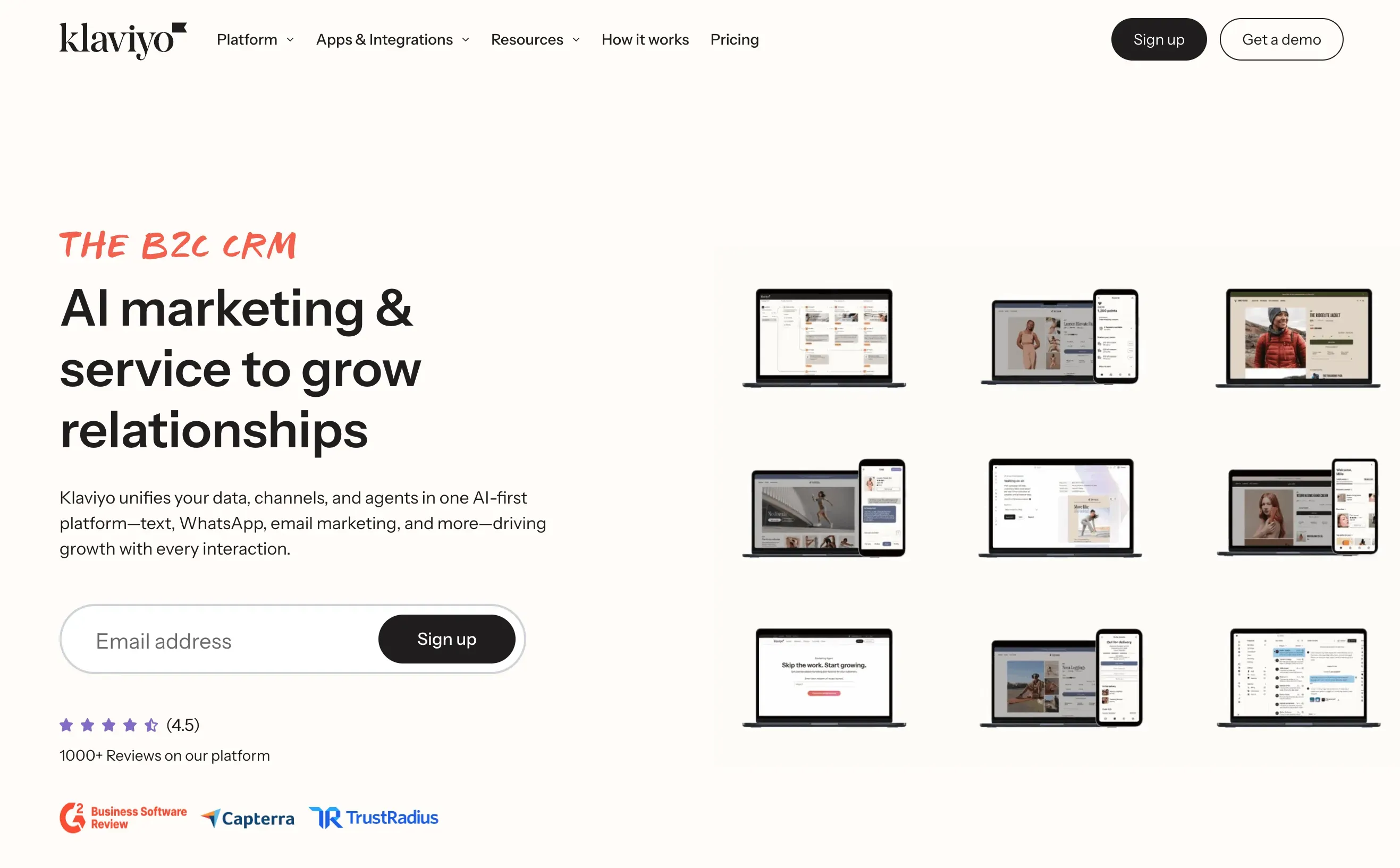
Klaviyo is one of the best email automation tools for e-commerce businesses, especially those using Shopify. It specializes in Shopify email marketing automation and customer data integration.
A popular feature is abandoned-cart automation, in which emails are automatically sent to recover lost sales.
Pros:
- Deep e-commerce integrations
- Advanced segmentation
- High ROI for online stores
Cons:
- Costs increase significantly as your business scales
- Less suitable for non-ecommerce
Pricing: Free up to 250 profiles, 500 emails/month, 150 mobile message credits; Paid starts at $20/month (5,000 emails/month).
7. MailerLite: Best Simple Email Marketing Automation Software
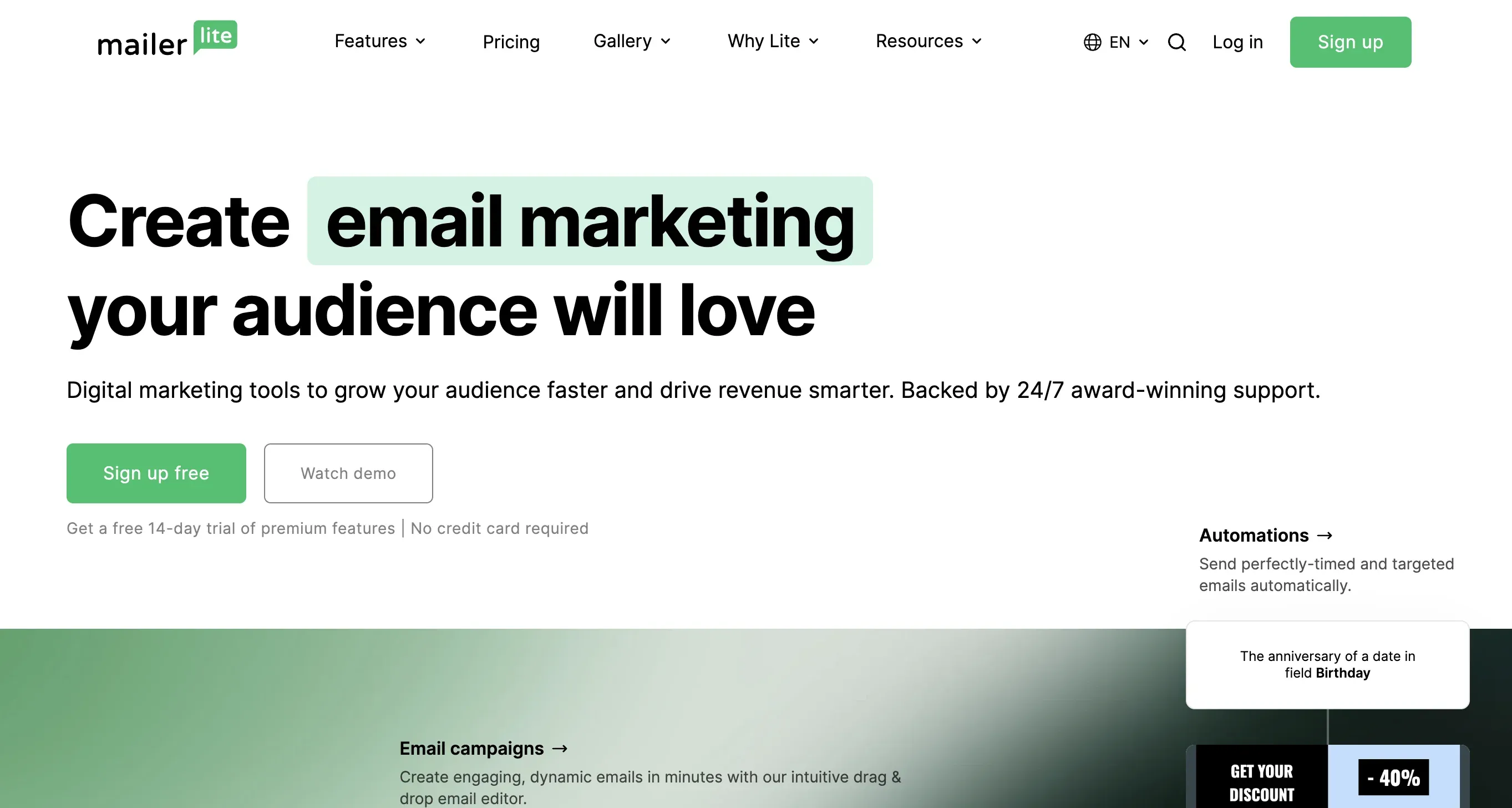
MailerLite is a lightweight, easy-to-use email marketing automation tool designed for creators and small businesses. It focuses on simplicity while still offering automation workflows.
Its drag-and-drop builder makes it easy to create campaigns without coding.
Pros:
- Clean UI
- Affordable pricing
- Good automation basics
Cons:
- Limited advanced features
- Fewer integrations
Pricing: Free up to 5,00 subscribers; Paid starts at $10/month ($9/month billed yearly)
8. Constant Contact: Best for Events and Nonprofits
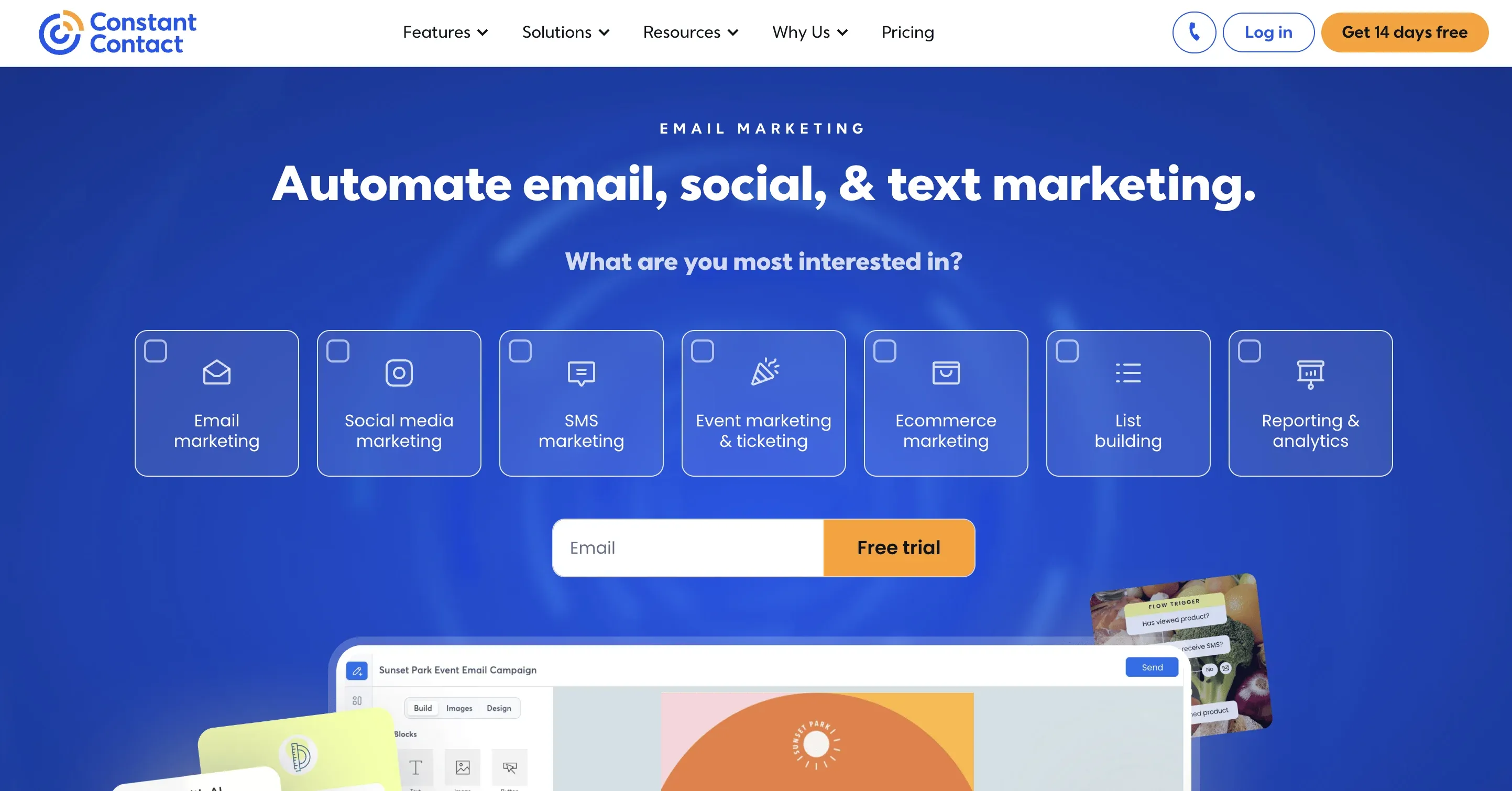
Constant Contact is a trusted email marketing platform with strong features for event marketing and nonprofits. It offers automation features like welcome emails and event reminders, making it ideal for organizations focused on engagement.
Pros:
- Great for events
- Strong support
- Reliable deliverability
Cons:
- Limited automation depth
- Automation features are basic compared to ActiveCampaign
Pricing: Starts at $8/month (Lite, Ideal for beginners)
9. Kit (formerlyConvertKit): Best Email Marketing for Creators
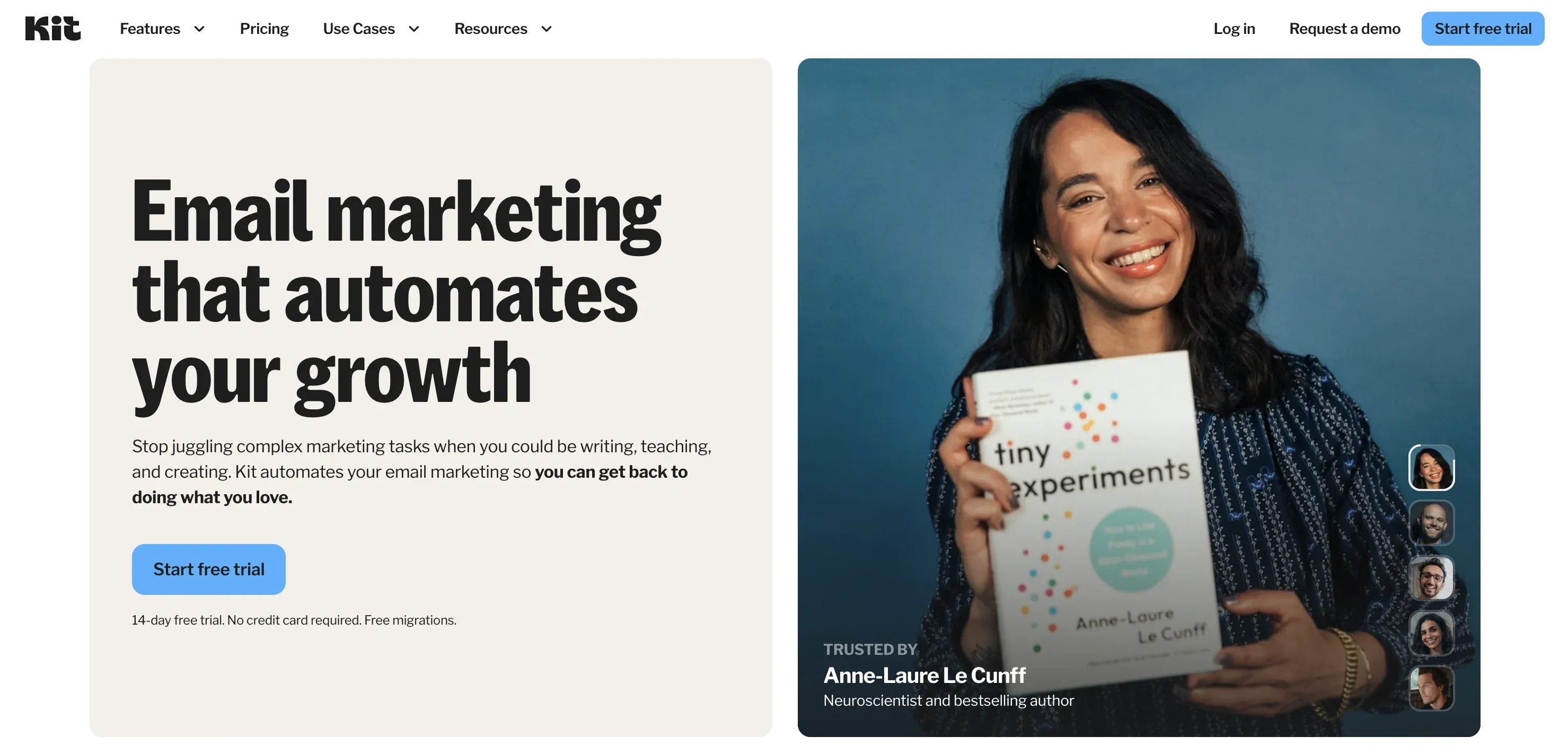
Kit (formerly ConvertKit) is designed for creators, bloggers, and solopreneurs. It’s a simple email marketing automation platform focused on audience building and monetization.
It supports tagging, automation funnels, and digital product sales, making it ideal for content-driven businesses.
Pros:
- Creator-focused features
- Easy automation setup
- Strong landing page tools
Cons:
- Limited design flexibility
- Higher cost for scaling
Pricing: Free plan available; paid plans start at $30/month ($390 billed yearly)
10. Zoho Campaigns: Best Affordable Email Marketing Tool
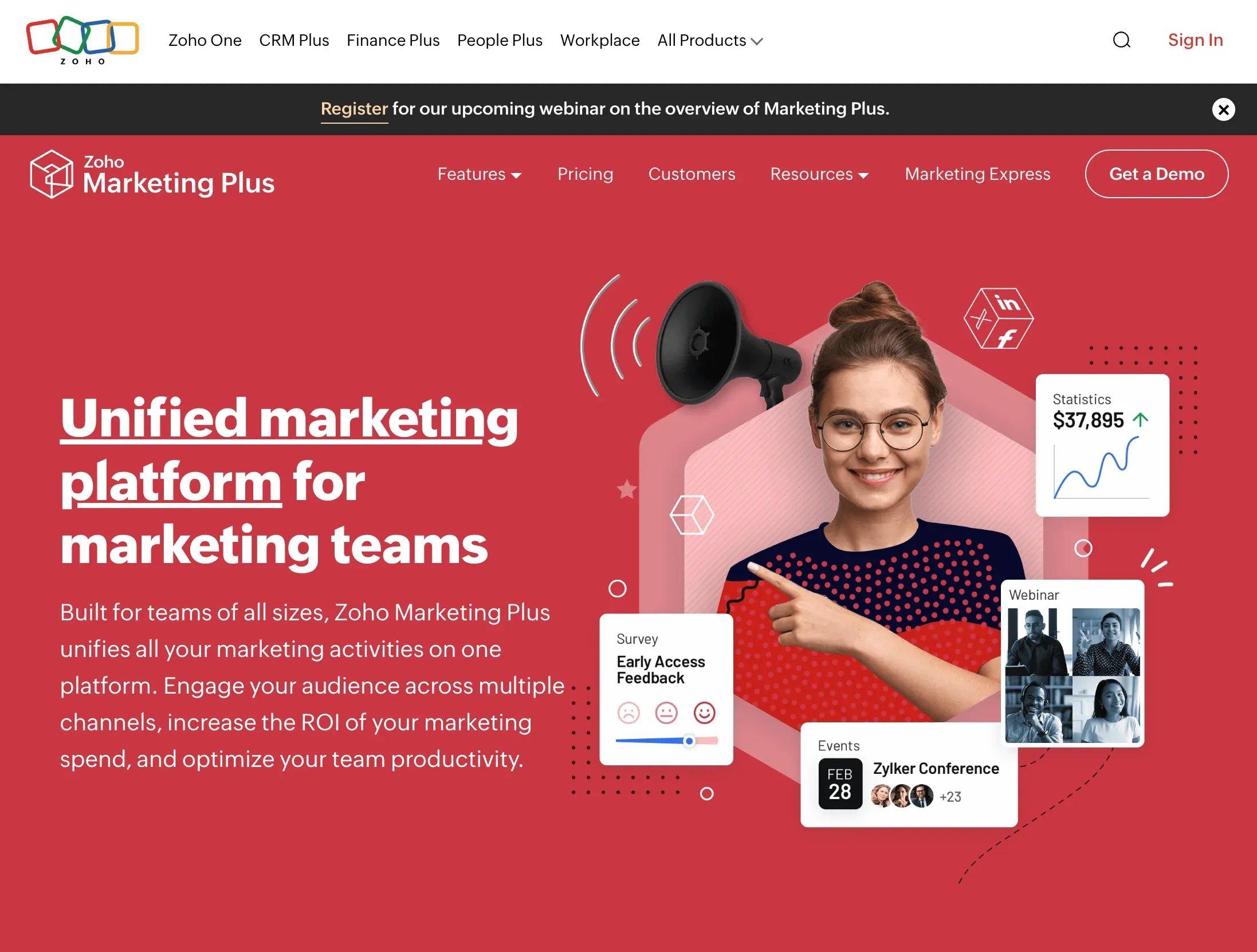
Zoho Campaigns is a budget-friendly email marketing tool that integrates well with the Zoho ecosystem. It offers automation workflows, segmentation, and analytics at a lower cost, making it a great option for startups.
Pros:
- Affordable pricing
- Robust automation features
- CRM integration
Cons:
- Steeper learning curve compared to simpler tools
- Limited templates
Pricing: Free plan available; paid plans start at $3/month (standard)
How to Choose the Right Email Marketing Automation Tool in 2026?
Choosing the best email marketing automation software depends on your business size, marketing goals, and budget. A thoughtful comparison of email automation software can help you avoid costly mistakes.
Affordability & Pricing Models
When evaluating email marketing automation pricing, consider whether the platform charges based on contacts or email volume. Contact-based pricing (like Mailchimp) grows with your list, while volume-based pricing (like Brevo) depends on how many emails you send.
Small businesses should prioritize affordable email marketing tools that scale gradually.
Ease of Use (The "No-Code" Standard)
Modern email marketing tools should include drag-and-drop builders and intuitive dashboards. The best easy email marketing automation tools allow users to create workflows without coding.
For small teams, usability is essential.
Advanced Features (AI & Segmentation)
AI is now a core part of email marketing automation. Look for features like:
- AI subject line optimization
- Predictive send times
- Email segmentation automation
These capabilities improve engagement and conversion rates.
Scalability
A scalable email marketing platform should grow with your business. Some tools offer shared IPs (lower cost), while others provide dedicated IPs (better deliverability for large senders).
Choose a platform that supports long-term growth.
Quick Email Marketing Automation Tool Comparison (2026 Pricing)
| Tool | Best For | Starting Price | Key Feature |
| Scrumball | Influencer outreach automation | Free/$32 |
|
| Mailchimp | Beginners | $10.89 | Templates |
| ActiveCampaign | Advanced workflows | $29/mo | Automation builder |
| HubSpot | All-in-one CRM | Free/$15 | CRM integration |
| Brevo | Transactional emails | Free/$25 | Volume pricing |
| Klaviyo | E-commerce | Free/$20 | Shopify integration |
| MailerLite | Simplicity | Free/$10 | Easy UI |
| Constant Contact | Events | $12 | Event automation |
| Kit (formerly ConvertKit) | Creators | Free/$15 | Funnels |
| Zoho Campaigns | Budget users | Free/$5 | Affordability |
Strategic Tips for Email Marketing Success
To maximize results with email marketing automation tools, it’s important to follow proven strategies.
Define Your Goal: Outreach vs. Nurture
Clarify whether you need email outreach automation (cold emails) or email lead nurturing automation (customer journeys). The tools you choose should align with your primary goal.
Start with a Clean List
Maintaining good email list hygiene ensures better deliverability and engagement. Regularly remove inactive subscribers to keep your list healthy and responsive.
Prioritize "Time to Value"
Choose tools that deliver quick results. Many small businesses don’t need complex enterprise features—focus on tools that work immediately.
Test Support Channels
Reliable email marketing customer support can save time and prevent issues. Choose email marketing platforms that offer fast response times and knowledgeable support teams.
Conclusion
Choosing the right email marketing automation tools for small businesses in 2026 can significantly impact your marketing success. From AI-powered creator outreach tools like Scrumball to beginner-friendly platforms like Mailchimp, there is a solution for every need.
FAQ
What is the easiest email marketing tool for beginners?
Scrumball is the easiest for automated outreach due to its AI agents, while MailerLite is widely considered the most user-friendly for designing newsletters. Both use drag-and-drop interfaces to remove technical barriers.
Is email marketing still effective in 2026?
Yes. Email marketing has an average ROI of $36 for every $1 spent, higher than any other channel. Unlike social media algorithms, you own your email list, making it the most reliable way to reach customers.
Can I switch platforms later?
Yes, but it can be painful. Migrating lists, recreating templates, and re-warming your IP address takes time. It is better to choose a platform that can scale with you for at least 1-2 years.
Does Google Gmail or Yahoo Mail block marketing emails?
They can if you don't follow best practices. In 2024, Google and Yahoo introduced stricter requirements for bulk senders (DMARC authentication). Ensure your chosen platform handles these technical setups for you.