

Choosing the right marketing automation platform can transform your business. With 76% of companies already using marketing automation platforms, making a smart choice that aligns with your goals is more important than ever.
The best marketing automation platforms streamline workflows, enhance customer engagement, and deliver real-time insights. But not all solutions are built the same.
In this article, we compare the top marketing automation platforms based on their key features, pricing structures, integrations, and ideal use cases. This side-by-side approach helps you identify the right fit for your business.
TL;DR: A Quick Marketing Automation Platform Comparison
To make the comparison easier to scan, we’ve broken down the leading marketing automation platforms side by side across the factors that matter most. Whether you're a startup, a growing eCommerce brand, or an enterprise team, this quick comparison table can help you narrow down the best option for your needs.
| Platform | Best for | Key features |
|---|---|---|
| Scrumball | Influencer marketing automation (DTC & ecommerce brands) | AI influencer discovery, automated outreach, campaign management dashboard, and ROI tracking |
| HubSpot | All-in-one marketing, sales, and CRM | CRM integration, marketing automation, CMS tools, analytics, app ecosystem |
| Marketo | Enterprise marketing automation | Lead scoring, multi-channel campaigns, A/B testing, and advanced analytics |
| Salesforce | B2B lead nurturing (Salesforce users) | Lead management, email automation, ABM tools, Salesforce integration |
| ActiveCampaign | SMB email marketing automation | Email workflows, built-in CRM, automation templates, and ecommerce integrations |
| SharpSpring | Agencies and cost-conscious businesses | All-in-one automation, CRM tools, strong integrations, and affordable pricing |
| Adobe Marketo Engage | Advanced enterprise personalization | Behavioral tracking, deep analytics, personalized campaigns, scalable automation |
Top Marketing Automation Platforms Compared
Scrumball: Best for Influencer Marketing Automation
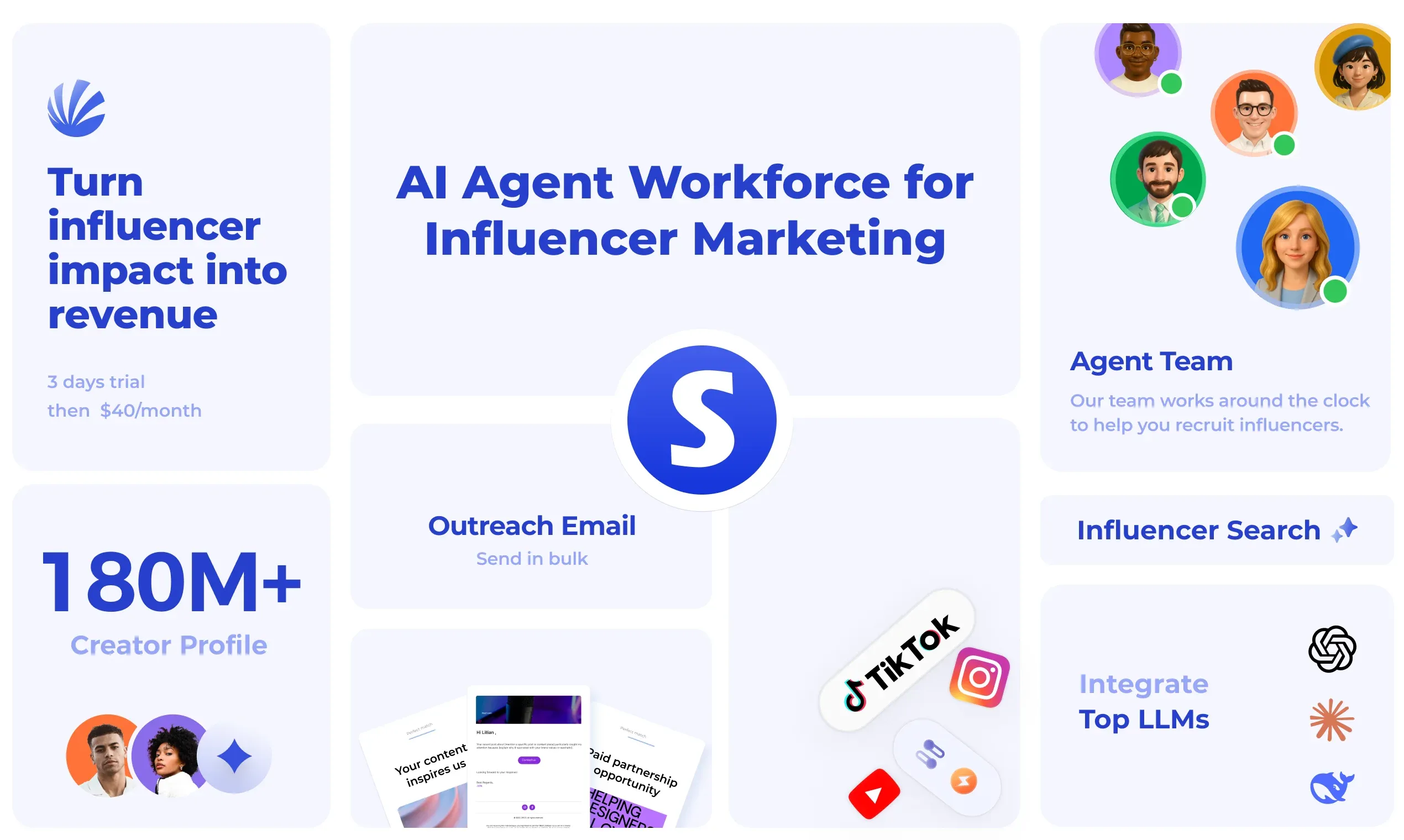
Scrumball stands out as a specialized solution designed for brands that prioritize influencer marketing over traditional omnichannel automation. Rather than trying to cover every aspect of marketing automation (like email campaigns or CRM workflows), it focuses on simplifying and scaling influencer collaborations through AI-driven processes.
Scrumball helps brands discover, manage, and analyze creator partnerships in one place. This makes it particularly relevant for DTC and e-commerce brands that rely heavily on social proof and creator-driven growth.
- Quickly find relevant creators using precise filters like audience, engagement, and niche.
- Reach out to influencers efficiently with automated messaging and workflows.
- Manage all influencer collaborations in one organized dashboard.
- Monitor ROI and engagement with clear, built-in analytics.
- Run and manage multiple influencer campaigns without added complexity.
By combining these capabilities, Scrumball significantly reduces the friction typically associated with influencer marketing, especially for brands managing high volumes of collaborations.
Benefits:
- Well-suited for brands running influencer campaigns, particularly in DTC and e-commerce
- Significantly improves efficiency in discovering and managing influencers
- Strong data transparency enables better decision-making and campaign optimization
- Simplifies communication between brands and creators
Limitations:
- Specifically for businesses needing an influencer marketing automation suite.
- Less relevant for B2B companies focused on lead nurturing rather than creator marketing.
Pricing:
Scrumball offers both individual and enterprise-level plans, starting at $32/mo, and provides a free trial, making it accessible for smaller teams as well as scaling brands. Pricing varies depending on usage, features, and campaign volume.
HubSpot: Best for All-in-One Marketing, Sales, and CMS Integration
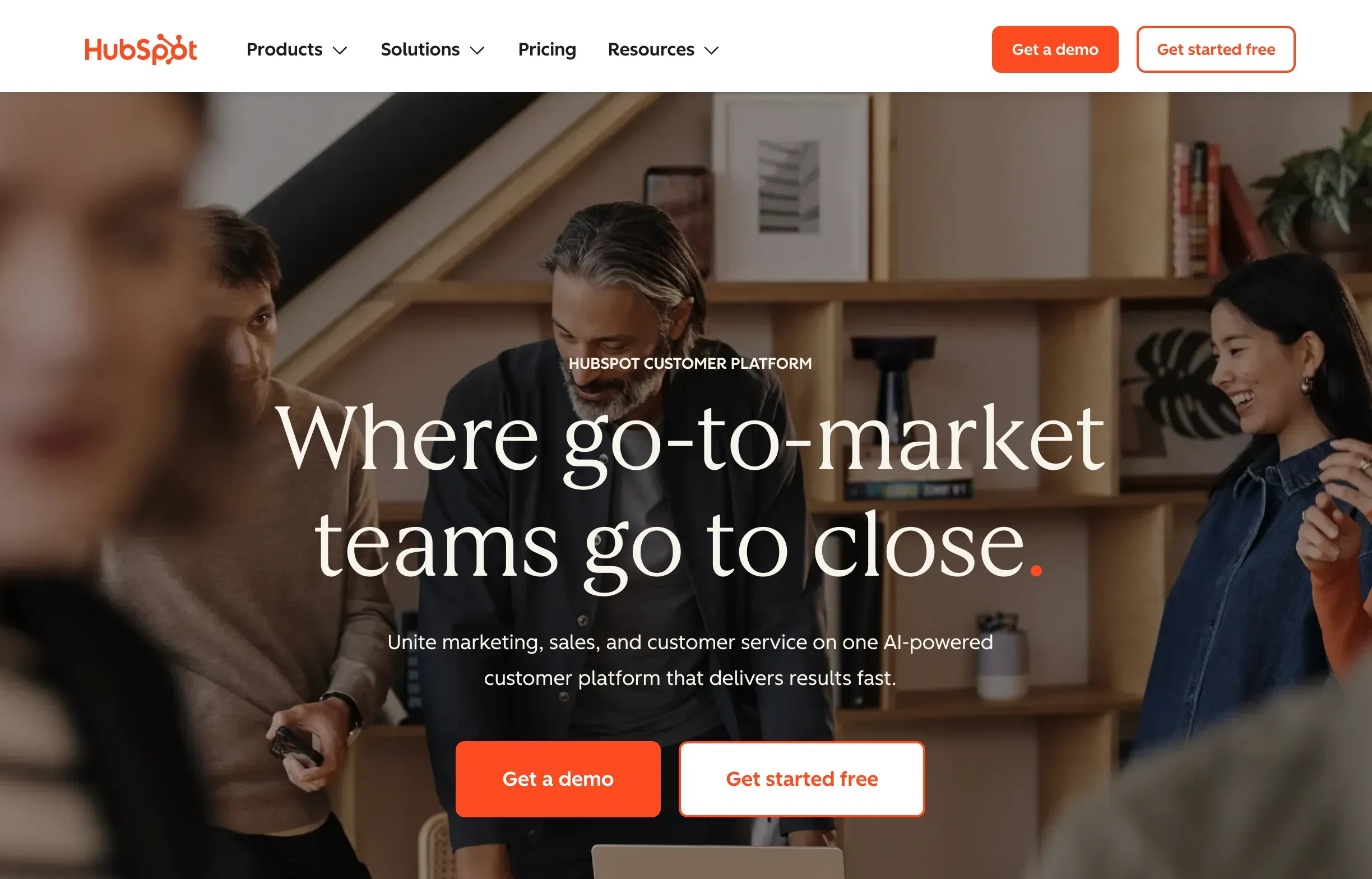
HubSpot stands out as a one-stop powerhouse for marketing needs. Its features include:
- A robust app ecosystem that supports seamless integration.
- Precise marketing ROI tracking to measure campaign success.
- Tools that align sales and marketing teams for better collaboration.
- Customizable workflows that adapt to your business requirements.
- A user-friendly interface that simplifies navigation.
HubSpot also offers a comprehensive content management system (CMS). This system allows you to create and optimize content effortlessly. Its actionable analytics provide insights to refine your strategies. These features make HubSpot one of the top marketing automation tools for businesses seeking a holistic solution.
Benefits:
- Automates repetitive tasks like email and social media campaigns
- Seamless CRM integration for a unified experience
- Scalable for growing businesses
Limitations:
- Costs can increase quickly, especially for advanced plans
- Lower-tier plans may lack essential features
- Customization options can be challenging in some cases
Pricing:
$50/mo, $45/mo if you pay annually. Provide a free trial for 28 days.
Despite these limitations, HubSpot remains a strong contender among the best marketing automation platforms.
Marketo: Best for Enterprise-Level Marketing Automation
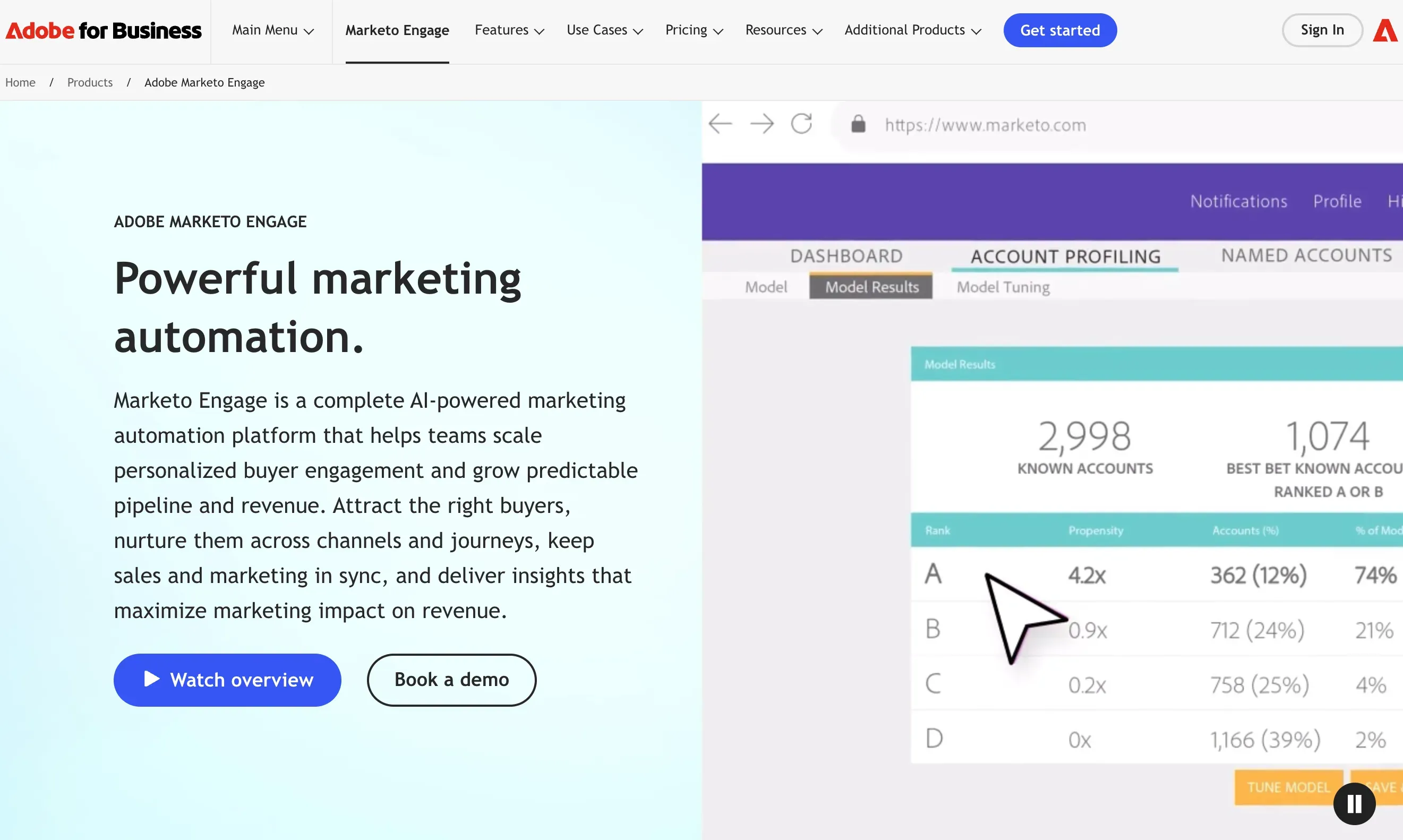
Marketo is known for its sophisticated capabilities. Key features include:
- Advanced lead management with scoring and nurturing workflows.
- Dynamic email marketing with A/B testing and personalized content.
- Multi-channel marketing automation for consistent messaging.
- Comprehensive analytics to track ROI and campaign performance.
- Extensive integration options with other tools and systems.
These features make Marketo a preferred choice for businesses aiming to execute successful campaigns across multiple platforms.
Benefits:
- Simplifies workflows and improves operational efficiency
- Optimizes content strategies with advanced automation
- Strong integration capabilities enhance data accuracy
- Robust analytics tools provide actionable insights
Limitations:
- Requires a clear marketing strategy for effective implementation
- Setup and system integration can be complex
- Must ensure compliance with data protection regulations
Pricing:
Customizable. Different price tiers are available depending on your needs.
Even with these drawbacks, Marketo continues to deliver strong value as a competitive B2B marketing automation platform.
Salesforce: Best for B2B Lead Nurturing and CRM Integration
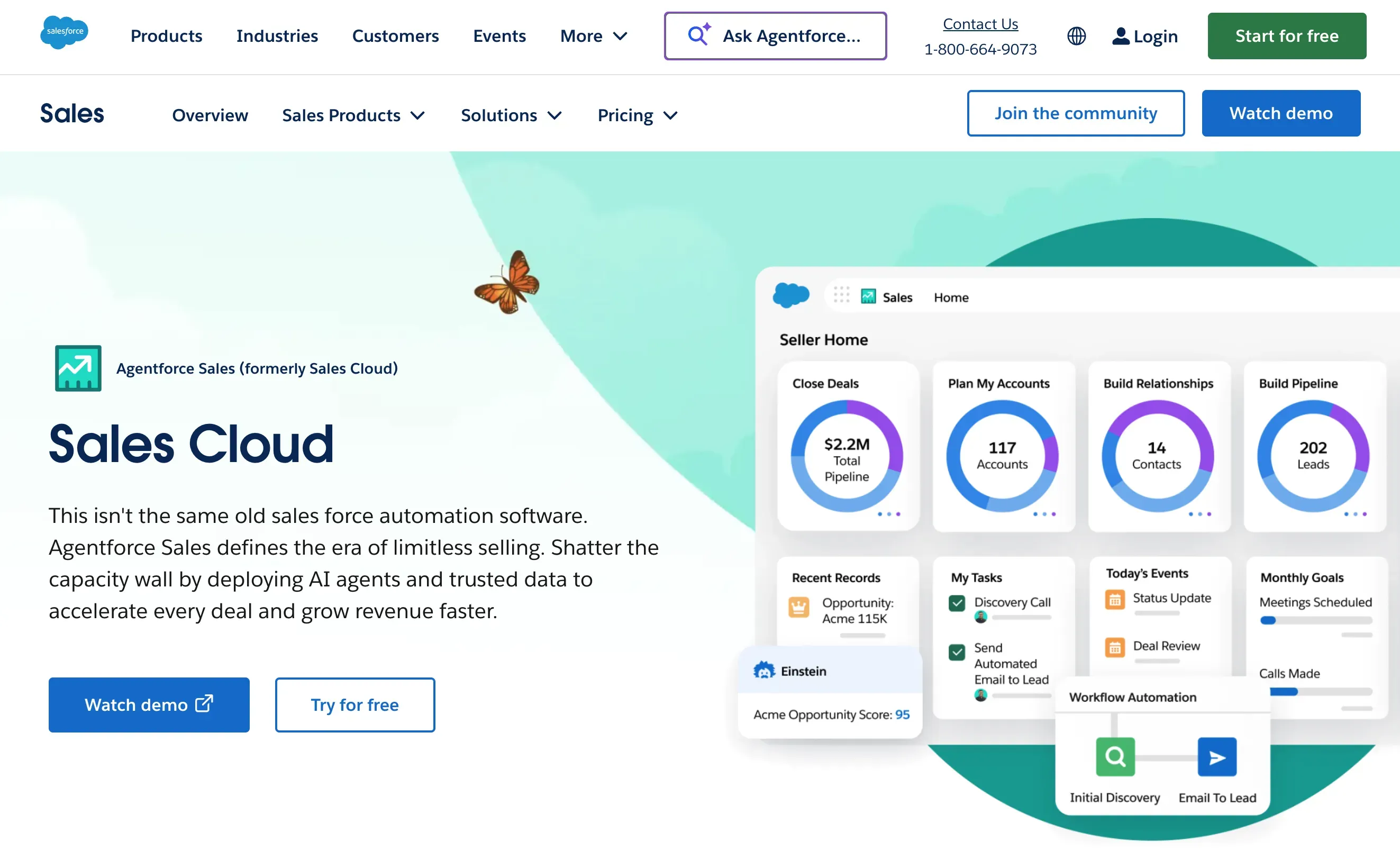
Salesforce is tailored for B2B marketing automation. Its standout features include:
- Streamlined lead management and smart lead generation.
- Effortless email marketing with automated journeys.
- Social media integration for broader reach.
- Insightful ROI reporting to measure campaign effectiveness.
- Account-based marketing enhancements for targeted engagement.
Salesforce’s Engagement Studio allows you to visualize and manage email drip campaigns. Its Einstein AI automates and optimizes campaigns using advanced insights. These features make Salesforce one of the best marketing automation software options for B2B businesses.
Benefits:
- Seamless integration with Salesforce, improving usability for existing users
- An intuitive interface that is accessible for beginners
- Supports multi-channel marketing campaigns
- Offers detailed segmentation capabilities
Limitations:
- Cost may be high for smaller businesses
- Advanced features can be overwhelming without proper training
Pricing:
Starting at $1,250 USD/Org/Month, customizable.
Despite these drawbacks, Salesforce remains a top choice for B2B marketing automation.
ActiveCampaign: Best for SMBs Focused on Email Marketing Automation
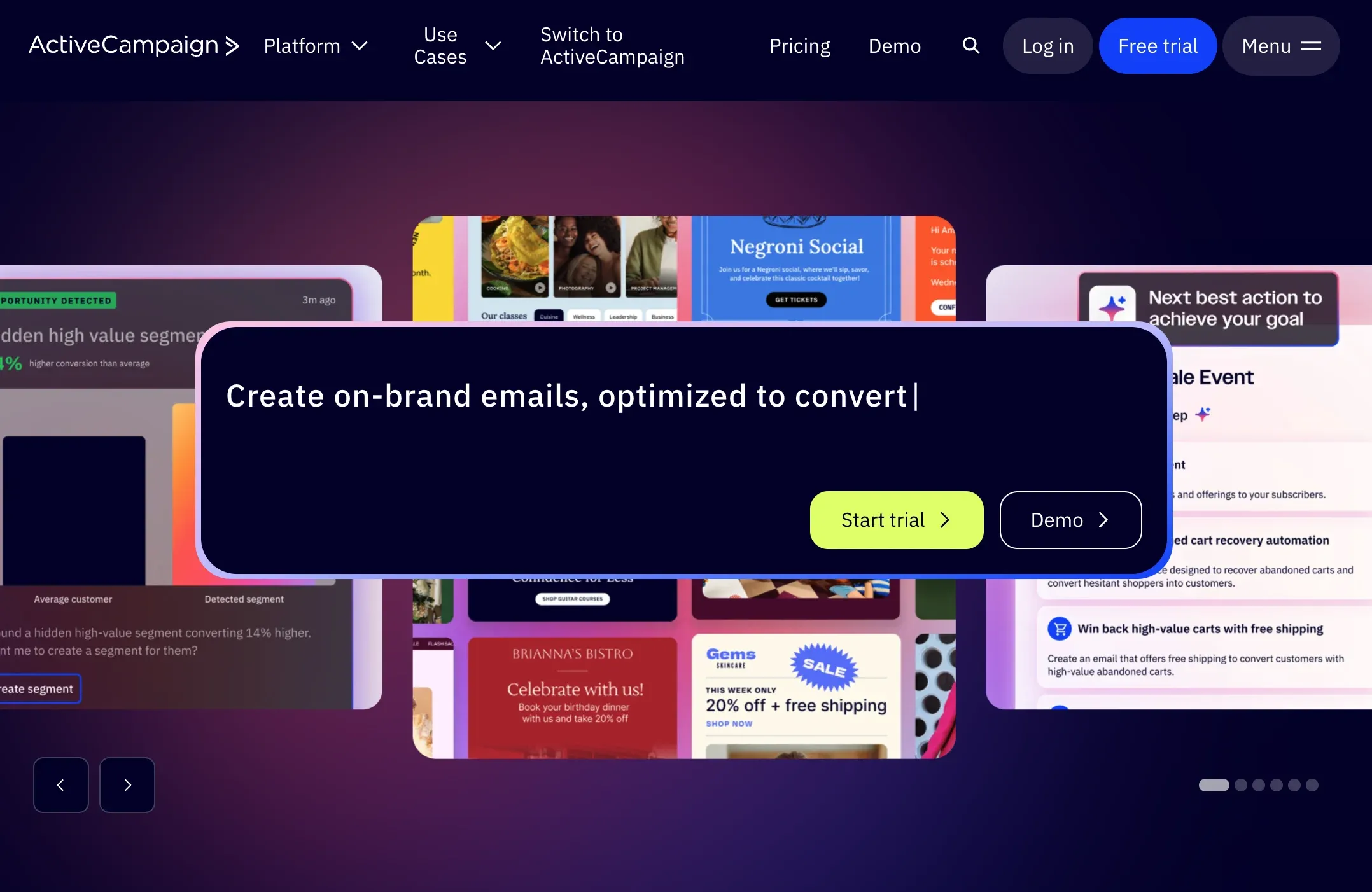
ActiveCampaign offers a versatile marketing automation platform tailored for small and medium-sized businesses (SMBs). Its standout features include:
- A user-friendly interface that simplifies navigation.
- Built-in CRM functionality to align sales and marketing efforts seamlessly.
- An extensive library of pre-built automation recipes for quick strategy implementation.
The platform offers robust marketing automation, including drip campaigns, autoresponders, and unlimited email sending. Its drag-and-drop editor simplifies email creation, while integrations with Shopify and WooCommerce enhance usability for SMBs.
Benefits:
- Supports personalized campaigns across email marketing, sales automation, and CRM integration
- Robust landing page builder for customized visitor experiences
- Over 200 pre-built automation sequences to save time and effort
Limitations:
- Slow load times may disrupt workflows
- Customer support can involve long wait times
- Frequent pricing increases may concern budget-conscious businesses
Pricing:
$15/mo for starter, Pro, and Enterprise packages are also available.
Despite these challenges, ActiveCampaign remains a strong contender in marketing automation platform comparisons for SMBs.
SharpSpring: Best for Agencies and Cost-Effective Automation
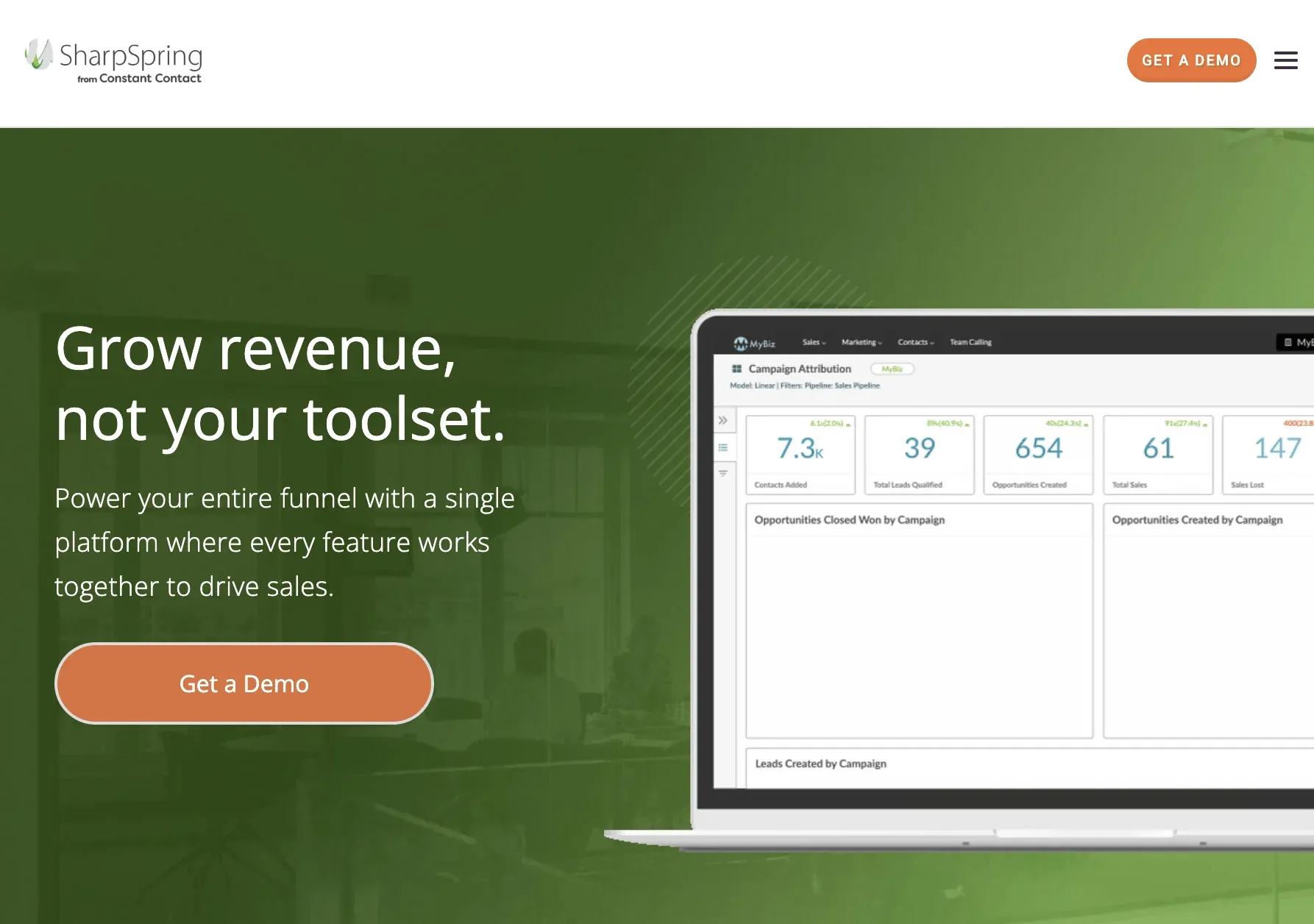
SharpSpring stands out as a cost-effective marketing automation platform. It provides an all-in-one tech stack, eliminating the need for multiple tools. Key features include:
| Feature | Benefit |
|---|---|
| All-in-One Marketing Automation | Offers a full feature set for a fraction of the cost of leading competitors. |
| Integration Capabilities | Built to integrate easily with existing tools, reducing costs related to switching platforms. |
| Affordable Pricing Model | Designed to be affordable for small to medium-sized businesses, enhancing cost-effectiveness. |
Benefits:
- Centralizes marketing efforts to improve efficiency
- Enhances lead generation through better tracking and nurturing
- Maximizes marketing spend by reducing operational inefficiencies
- Affordable with robust features
Limitations:
- The lack of detailed analysis on potential challenges may leave some users unprepared
Pricing:
Customizable. Different price tiers are available depending on your needs.
SharpSpring’s pricing model makes it accessible for SMBs. Its integration capabilities ensure seamless workflows, while its comprehensive feature set supports growth without additional costs.
Adobe Marketo Engage: Best for Advanced Personalization and Scalable Campaigns
Adobe Marketo Engage differentiates itself with advanced features designed for sophisticated marketing strategies.
| Unique Feature | Description |
|---|---|
| Deep Analytics Insight | Provides a comprehensive view into campaigns, enhancing decision-making. |
| Advanced Behavior Tracking | Enables highly tailored marketing strategies based on user interactions. |
| Robust Personalization | Allows content to be modified in response to user interactions, surpassing competitors. |
These features make Adobe Marketo Engage a top choice for businesses seeking advanced analytics and personalization capabilities.
Benefits:
- Advanced analytics for better decision-making
- Strong lead nurturing capabilities
- Campaign optimization tools to improve results
Limitations:
- Steep learning curve requiring additional training
- Integration limitations may affect flexibility
- Resource-heavy operations can challenge smaller teams
Pricing:
Customizable. Different price tiers are available depending on your needs.
Despite these drawbacks, Adobe Marketo Engage remains a powerful tool for B2B marketing automation.
How to Choose the Right Marketing Automation Platform?

Choosing a marketing automation platform is less about finding the “perfect” tool and more about finding the one that fits your business stage, goals, and resources. Below are the key factors to consider before making a decision.
Define Your Budget
Budget is usually the first filter when comparing platforms, but it’s important to look beyond the monthly subscription price.
- Pricing tiers: Most platforms follow tiered pricing models based on features, contacts, or usage volume. Entry-level plans may look affordable, but advanced automation, reporting, or integrations are often locked behind higher tiers. Tools like HubSpot or Marketo, for example, can become significantly more expensive as your needs grow.
- Hidden cost: Beyond subscription fees, consider additional costs such as onboarding, training, premium integrations, data migration, and potential add-ons. Some platforms may also require technical support or consultants for full implementation, which can increase the total investment.
Match Features to Business Goals
Not every business needs a full enterprise-level system. The right choice depends on what you want to achieve in the short and long term.
Short-term vs. long-term
In the short term, you may only need email automation, lead capture, or basic CRM functions. Platforms like ActiveCampaign are often sufficient for this stage.
For long-term growth, however, you may need advanced segmentation, multi-channel campaigns, and deeper analytics. Tools like Marketo or Adobe Marketo Engage are better suited for scaling operations and complex customer journeys.
Consider Ease of Use and Support
Even the most powerful platform loses value if your team struggles to use it effectively.
Onboarding
Some platforms are designed for quick setup with intuitive interfaces and pre-built templates, while others require technical expertise and longer onboarding periods. HubSpot and ActiveCampaign are generally easier for beginners, while Marketo typically requires more training.
Support
The quality of customer support can significantly impact your experience. Look for platforms that offer responsive support, onboarding assistance, and clear documentation. This is especially important if your team has limited technical resources or is new to marketing automation.
Final Considerations
Choosing the right marketing automation platform can significantly impact your business. After reading our insights, you can now identify the right auto marketing tools that address your specific needs. Focus on integration options, automation capability, and scalability to ensure the platform supports your goals. Gather feedback from your team to evaluate usability and compatibility.
Exploring free trials or demos is essential. These hands-on experiences let you test features and assess how well the marketing automation platform aligns with your operations. This approach ensures you make an informed decision that drives long-term success.
FAQ
What is the primary purpose of a marketing automation platform?
A marketing automation platform helps you streamline repetitive tasks like email campaigns, lead tracking, and customer segmentation. It improves efficiency, saves time, and enhances customer engagement by delivering personalized experiences.
Marketing automation tools and platforms are one of the best approaches to improve your marketing workflow and improve marketing campaign ROI in the long run.
How do marketing automation platforms improve lead management?
The marketing automation platforms score and segment leads based on behavior and demographics. They also nurture leads through automated workflows, ensuring consistent communication. This approach helps you focus on high-potential prospects and boosts conversion rates.
Can small businesses benefit from marketing automation tools?
Yes, small businesses can use marketing automation tools to automate tasks, save time, and improve customer engagement. Many platforms offer affordable pricing and user-friendly interfaces, making them accessible for businesses with limited resources.
What should you prioritize when choosing a marketing automation platform?
Focus on features like scalability, integration capabilities, and analytics. Ensure the platform aligns with your business goals and offers robust support. Free trials or demos can help you evaluate its usability.
Are marketing automation platforms difficult to implement?
Most marketing automation platforms provide onboarding resources, tutorials, and customer support to simplify implementation. Choosing a user-friendly platform and involving your team in the process ensures a smoother transition.